Homemade Sourdough Bread (Including Starter)

This has been a fun week for me. In preparation for some food that I want to make tomorrow, I decided that I would try my hand at making fresh sourdough bread. This is mainly because I could not find any raw sourdough bread in the grocery stores, so this ended up working out for me. I tried to find if there was a standard recipe for a starter, but there are many variations (some called for a thinner starter, some called for a thicker starter). Some required very precise measurements. When I cook, I am not usually precise, but when I bake, I try to be precise with the main ingredients. Since there were so many variations, I tried to do my best and see what happened.
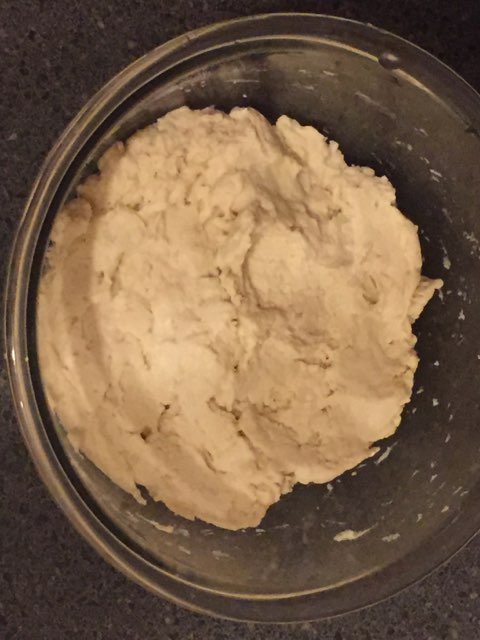
I started this on Sunday, since most recipes said it would take about 5 or 6 days for the starter to be ready. I used just over 3/4 cups of flour and 1/2 cup of water. Mixed it up, put it in a bowl and loosely covered it with plastic wrap. It seemed to be a bit thick, but I didn’t want to overthink things.
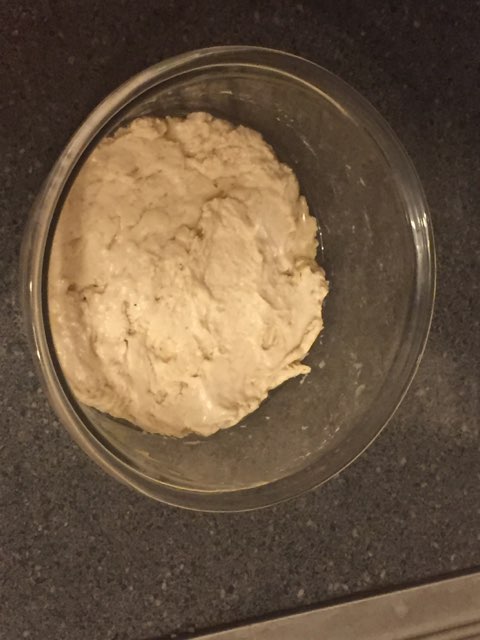
Monday night came and I was ready for phase two. It had set for 24 hours and did not look as thick. There was a little moisture around the outside edges, so my first thought was that I didn’t mix it all the way, but I think this was more just the natural process.
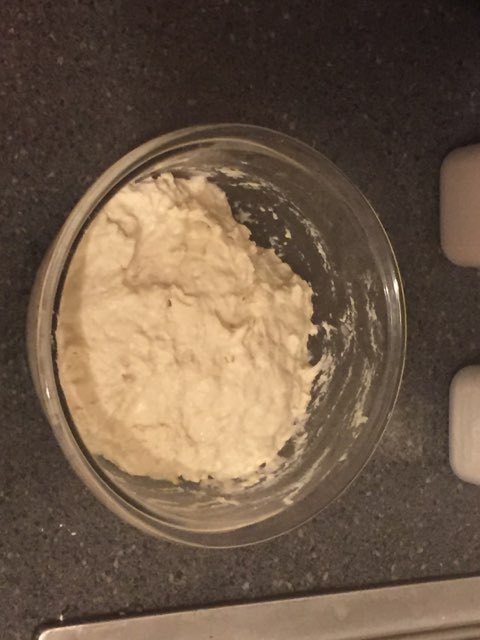
It was feeding time, so I mixed in the same amounts of flour and water as the first day, covered loosely with plastic wrap and let it be.
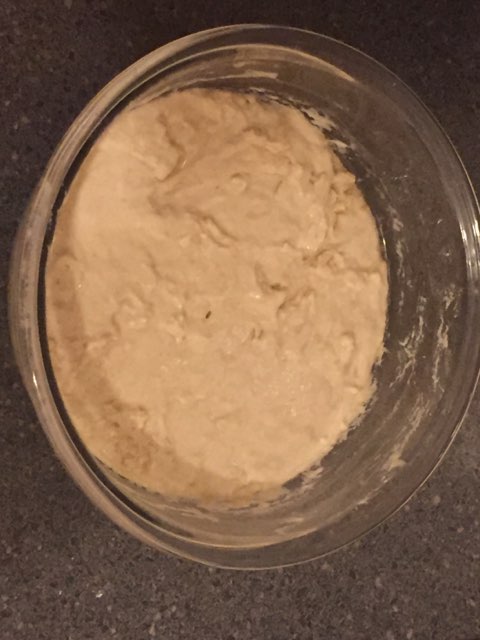
Tuesday night arrived, and it was looking a little thinner, but there weren’t any bubbles or anything. This is when I was starting to question if I had done it right. Even though the recipes said it could take a couple of days to start seeing bubbles, I had doubt. The recipes also said it should be kept at a temperature of 70-75 degrees. I keep my house between 60-65, and I had it in a glass bowl, which felt even colder. So I was questioning whether or not this would work.
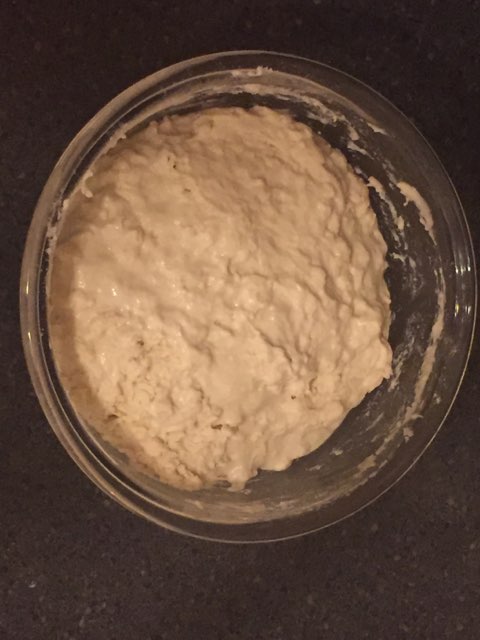
I did another feeding, and had my fingers crossed that something – anything – would happen.
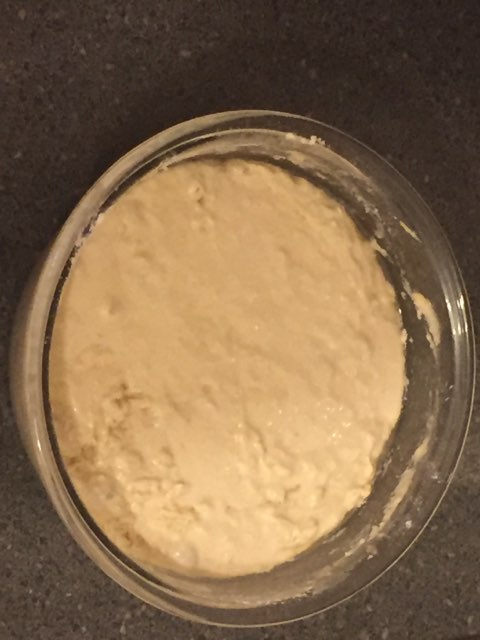
Wednesday evening came along and I was happy. There were a couple of bubbles in there. Not many, but at least some. I had some optimism. It didn’t taste any different, though (I took little tastes every night, just because I’m weird like that).
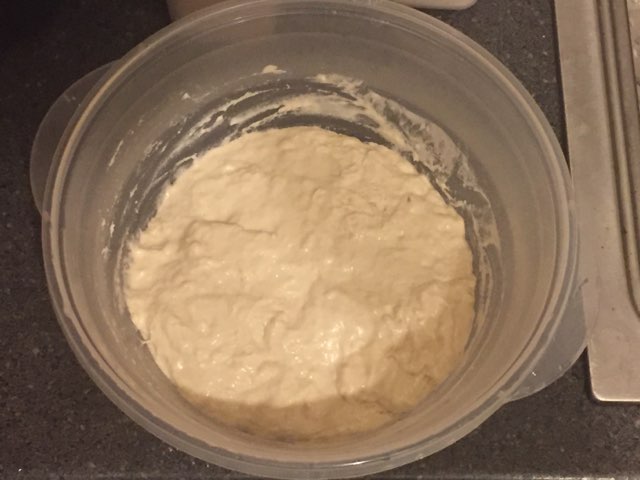
It was time to feed it again. I had not factored in all of the days I would be adding flour and water, so the original bowl I started with got to be too small. I had to upgrade to a larger bowl (which happened to be plastic). Loosely covered it, and let it go.
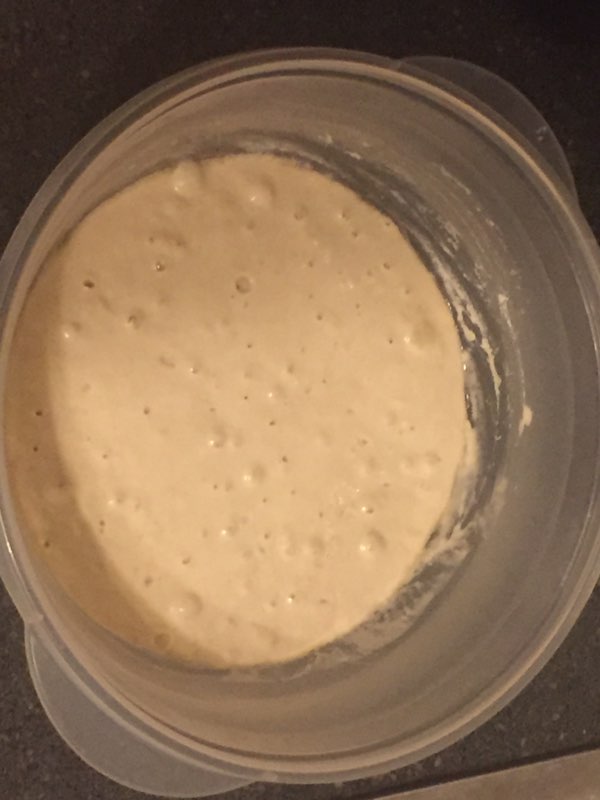
Thursday night arrived and I was happy with what I saw. There were quite a few bubbles, and it started to have an “aroma” to it.

I did my evening feeding and let it be for another day.

Friday night came and then came the words. “Feed me, Seymour!”. This was really odd, since my name is not Seymour, and I did not name this Audrey II. For those of you who get the reference, thank you for rolling your eyes. For those of you who did not get the reference, you can roll your eyes later. The aroma had definitely become more distinct. I now understood why they call it sourdough.

I wanted to try to do a test run on Saturday, so I decided to take some of the starter aside. I fed the starter base and let it sit.
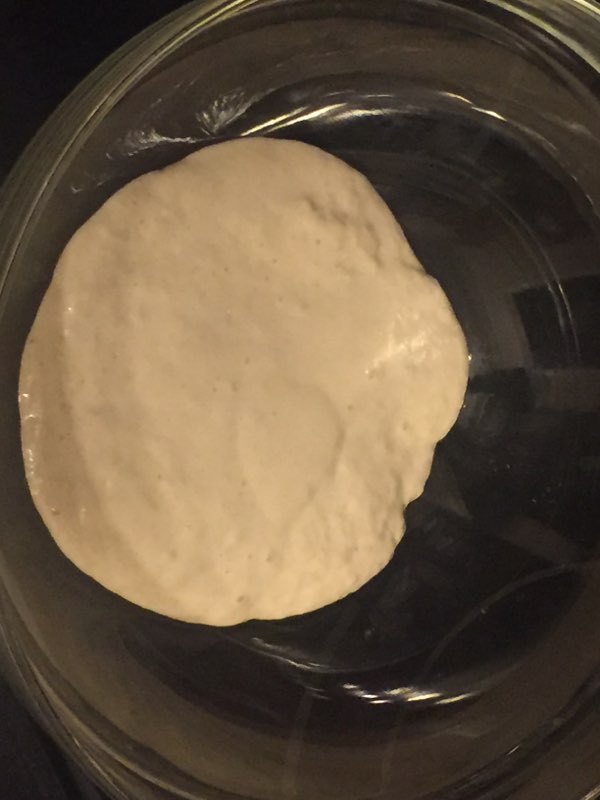
I took out one cup of the starter.

I added 2 cups of flour, 1 cup of water and a pinch of salt. I mixed it all together, put a light layer of oil on the top, covered it loosely with plastic wrap, and let it stay in the bowl to sit overnight. It was still a bit sticky, which I think was a mistake on my part.

When I woke up in the morning, there was not much of a change to the dough. I added a little flour to it and turned the oven on to 400.

I put a little bit of flour on a baking sheet and placed the bread on top of it. I then gave it an “X” on the top. There was still another 10 minutes before the oven was ready, and it started to rise a little within that time. That let me know I messed up with how I put this all together. No matter, I put it in the oven for about 45 minutes.

The house had a nice sourdough bread smell to it, so I was a happy camper. I checked the temperature with a thermometer (it should be around 210 in the center), and it was ready to cool.

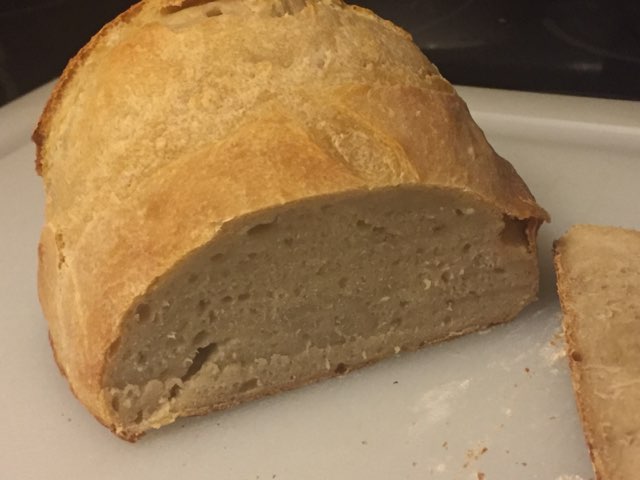
I learned quite a few things with this test run. I should have made the dough a better consistency. It was too sticky, which meant it needed more flour. I think that the additional flour might have helped with the rising. I’m no food scientist, so I could be wrong. Once I had it at the right consistency, I should have given it more time to rise. I also should have baked it on parchment paper or used some cooking spray. It stuck to the pan in a couple of places, and it was not fun when it was time to clean the pan.

As far as the flavor goes, I was happy. The outer crust was hard, but not overly chewy, which is one of the things I don’t really like about sourdough bread. The inner part of the bread had the familiar flavor. Biting into it reminded me of the flavors that I’m used to. It was a bit dense, but that was probably because I did not let it rise properly.

So what I have is a gassy, dense sourdough starter and sourdough bread. Gassy and Dense – just like its dad. Awww. I’m glad that this first batch did not turn out perfectly. I got some of the basics down, but I need to learn. I’ve made different types of bread before and they all worked out. This will just take me some more practice. Trying and failing is better than not trying and regretting. Stay positive!
Slow Cooked Baby Back Ribs

This past Friday, I received an email from one of the grocery stores I frequent, Harris Teeter. There was a weekend only special: buy 1 rack of baby back ribs, get 2 free. That is a deal that is just too good to pass up. As soon as I finished work on Friday, I made my way to the grocery store. There were only three left when I got there, so I really lucked out. I would have considered waiting until Saturday morning, but we were expecting some snow and ice, so I figured I’d play it safe. It’s a good thing, too. We didn’t get too much snow, but we got a lot of rain, which turned to ice very quickly. My car was iced over, so I would not have been able to go anywhere.

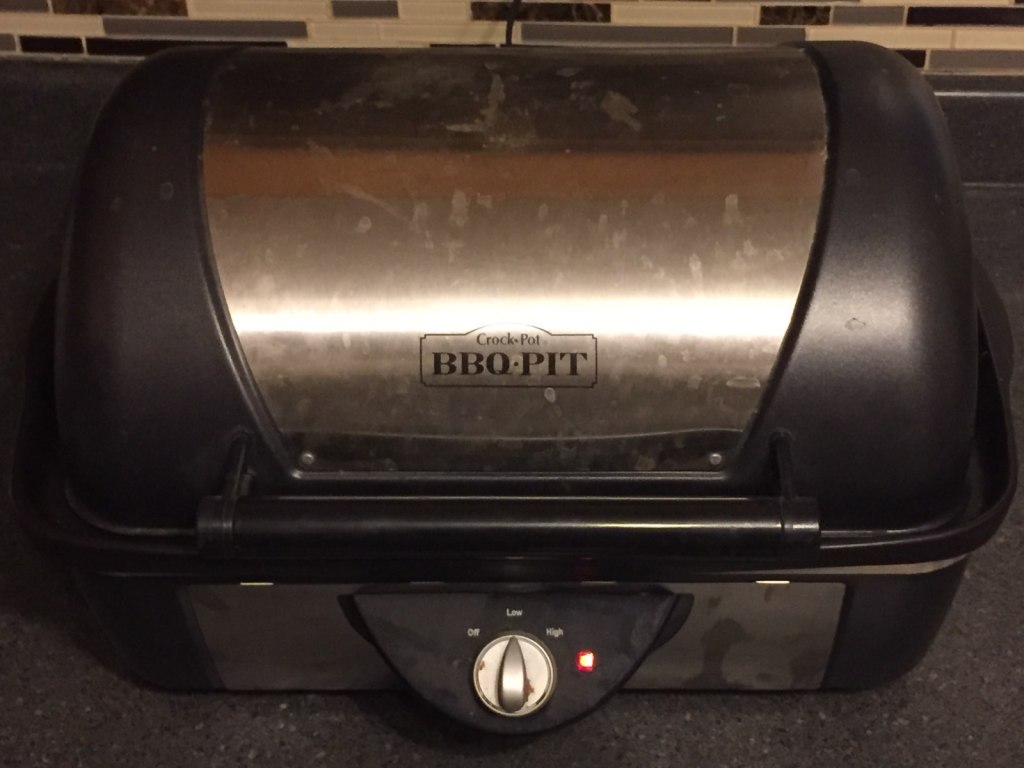
I don’t remember exactly when I got this BBQ Pit Crock Pot, but I am glad that I did. I don’t believe they make these any more, which is a shame. I Haven’t used it since I moved back to Maryland 4 1/2 years ago, so it was long overdue for some usage.

I decided that I would be doing a dry rub for the ribs. I started by putting a mixture of apple juice and orange juice on the bottom of the pot. I then used some of my dry rub mix on the ribs.

1/4 cup sugar

1/4 cup brown sugar

1 Tablespoon paprika

1 teaspoon black pepper

1 teaspoon chili powder

2 teaspoons rubbed sage

1/2 teaspoon turmeric power

1 teaspoon garlic powder

1/2 teaspoon cayenne pepper

1/2 teaspoon rosemary

1/4 teaspoon citric acid

I’ve used this before and it’s worked out quite well. There’s no salt in there, so this makes a good low sodium meal.

The slabs were a bit too big for the pit, so I had to trim them in order to get them all in the crock pot. I woke up early, so I was able to get this started on low heat right around 5:30 AM.

Although it was probably ready sooner, I didn’t touch it until 2:30 PM. I confirmed the temperature of the meat was at least 170, and it was good to go.

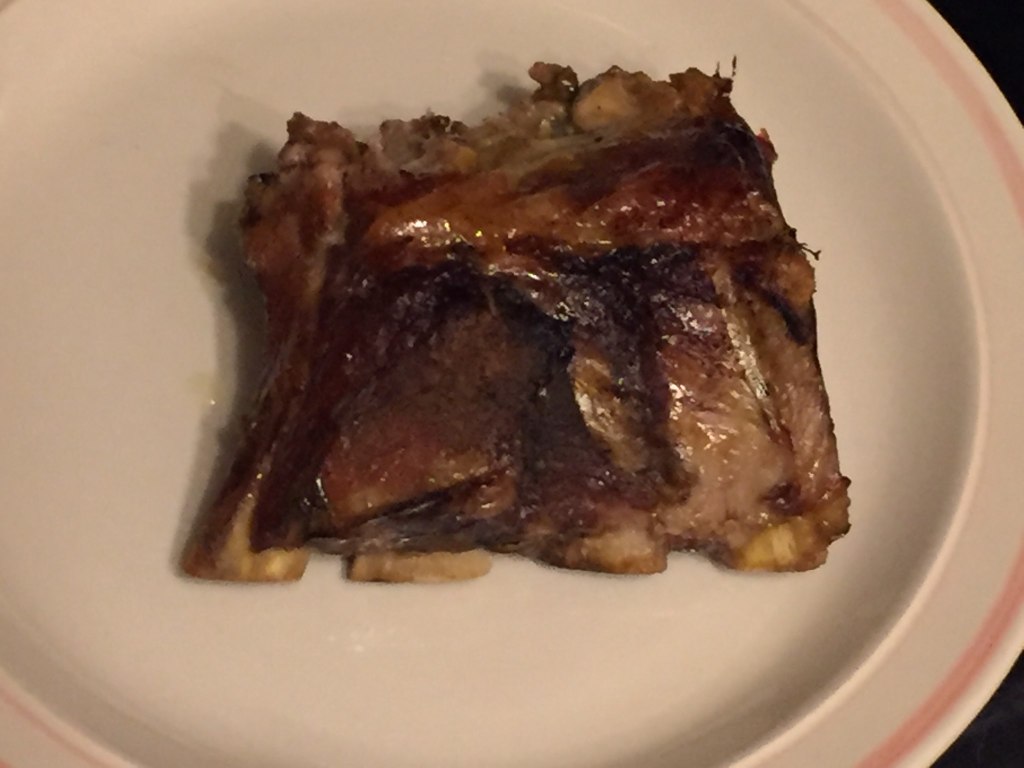
It took a little maneuvering to get them out of the pit, but they looked great to me.

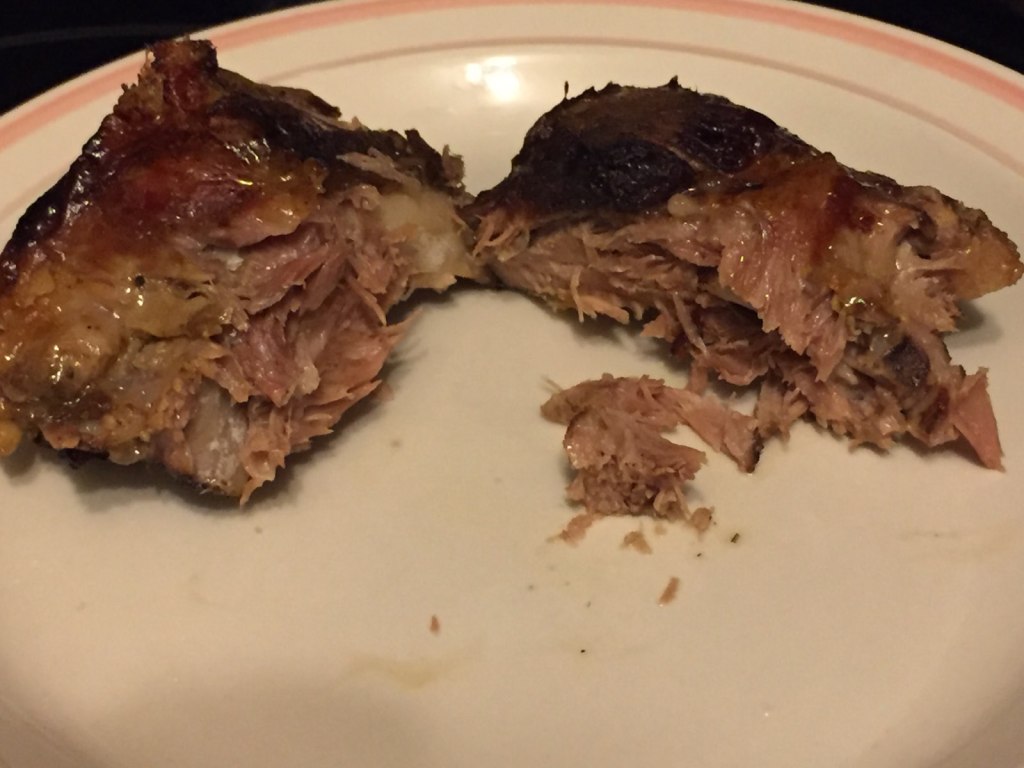
They were nice and tender and had some really good flavor to them. I had some rice and some sauces for dipping, although I also liked eating them as they were.

I’m not always a fan of ribs, but I usually enjoy baby back ribs. They tend to have meat that is easier to get to and easier to bite through. These slabs were “extra meaty”, and it was true. I ended up eating more than I should have, but still have plenty of leftovers that will get me through the week. Now that I’m working from a home office full time during the week, these will provide a quick and easy meal when I need to take a short lunch break.

I’m glad that I was able to use my BBQ Pit Crock Pot again. It’s been too long since I last used it. I will probably use it once or twice a year, but it’s definitely worth having for weekends like this. Clean-up may be a bit rough, but the flavor and ease of cooking makes it worth it. Having my food taste even better than expected sure made it easy to stay positive!
Roasted Vegetable Soup

I made this soup yesterday. There are a few different components to it, and they all worked really well together.

INGREDIENTS

3 medium carrots

5 red potatoes

1/2 onion

8 cloves garlic

2 Tablespoons fresh ginger

2 Tablespoons fresh turmeric

2 Tablespoons Olive oil

2 Tablespoons Sesame oil

Ground Pepper

5 cups broth

2 1/2 cups water

OPTIONAL INGREDIENTS

2 pinches Citric acid

1 package udon noodles

PEANUT BUTTER SAUCE (Ingredients below)

1/3 cups creamy peanut butter

1 Tablespoon vinegar

1 Tablespoon Teriyaki sauce

1/2 Tablespoon hot sauce

I had some home made chicken broth on hand, but broth from a store will also work. It doesn’t have to be chicken broth, just a broth of your choosing.

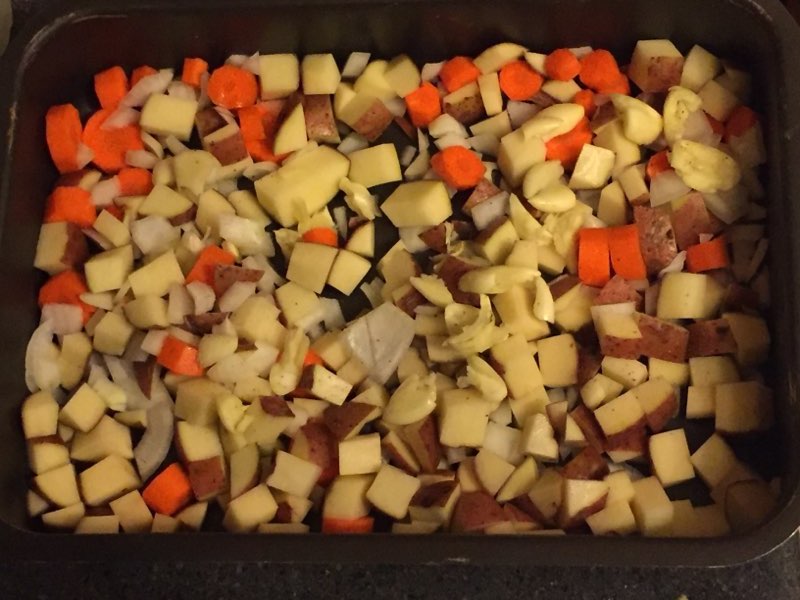
The first step is to preheat the oven to 400 degrees. I chopped up the carrots, potatoes, and onions. I also chopped the garlic. I smashed once to remove the skin, and then smashed again to have it broken down into large chunks. If you would prefer minced or chopped up, that will also work.

Coat the bottom of the roasting pan with olive oil. Add the carrots, potatoes, onions and garlic. Swish it around to get as many pieces coated as possible. Ground some pepper and swish it around again. Place in oven and bake for 15 minutes.

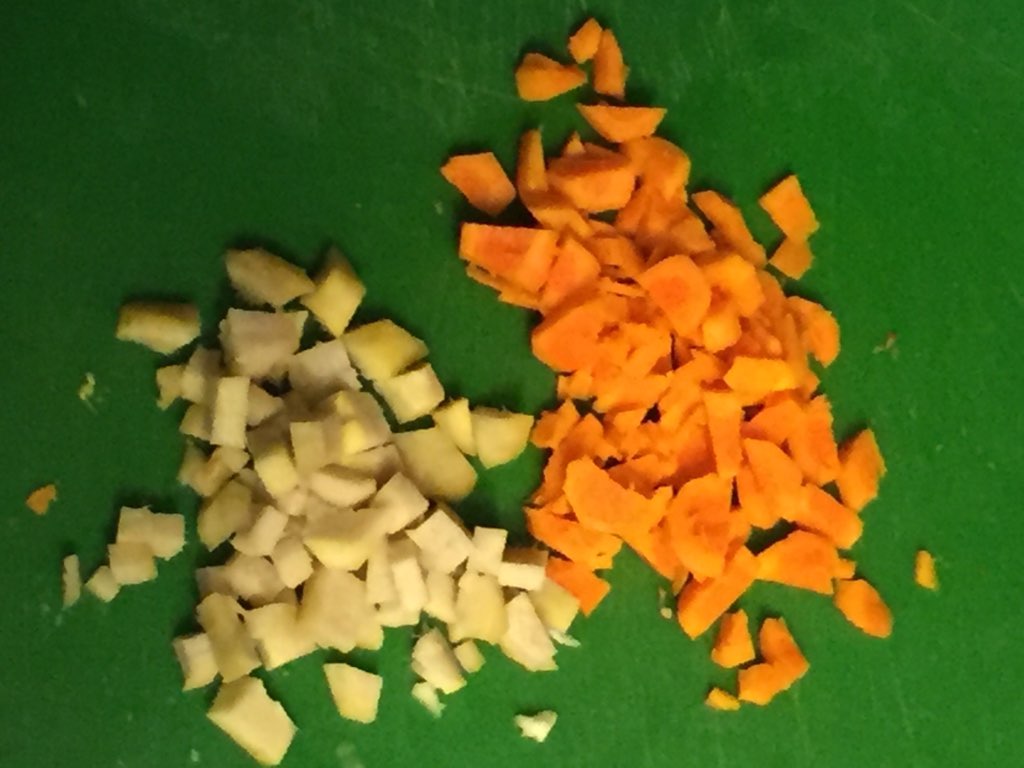
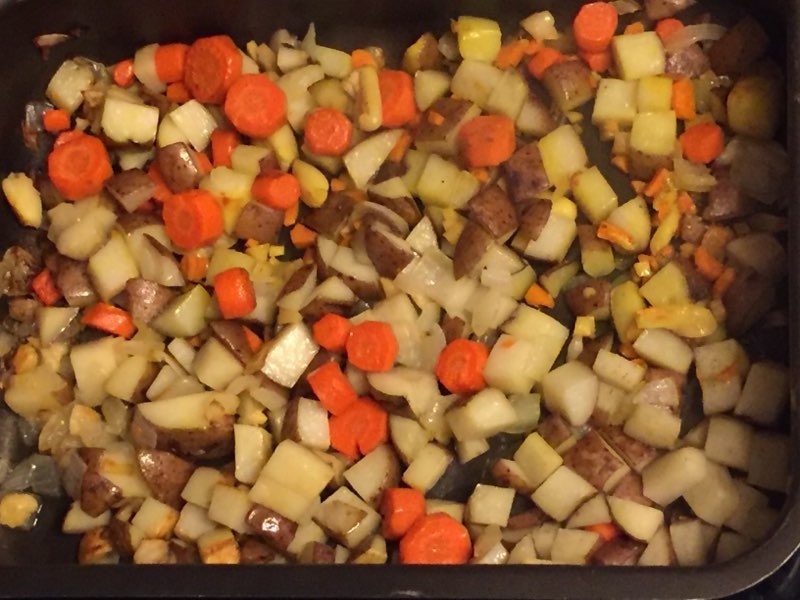
While the veggies are roasting, cut up the ginger and turmeric. If you prefer to have them minced of finely chopped, that will work. I enjoy the flavor of biting into fresh ginger, but it’s not for everyone. When the 15 minutes of baking are done, take out the vegetables. Add the ginger and Turmeric, and then drizzle with the Sesame oil. Swish around and continue to bake for another 15 minutes.

Once the vegetables are ready, you can remove them from the oven. Let them rest about 5 minutes. The carrots and potatoes should have a slight firmness on the outside and should be soft on the inside.

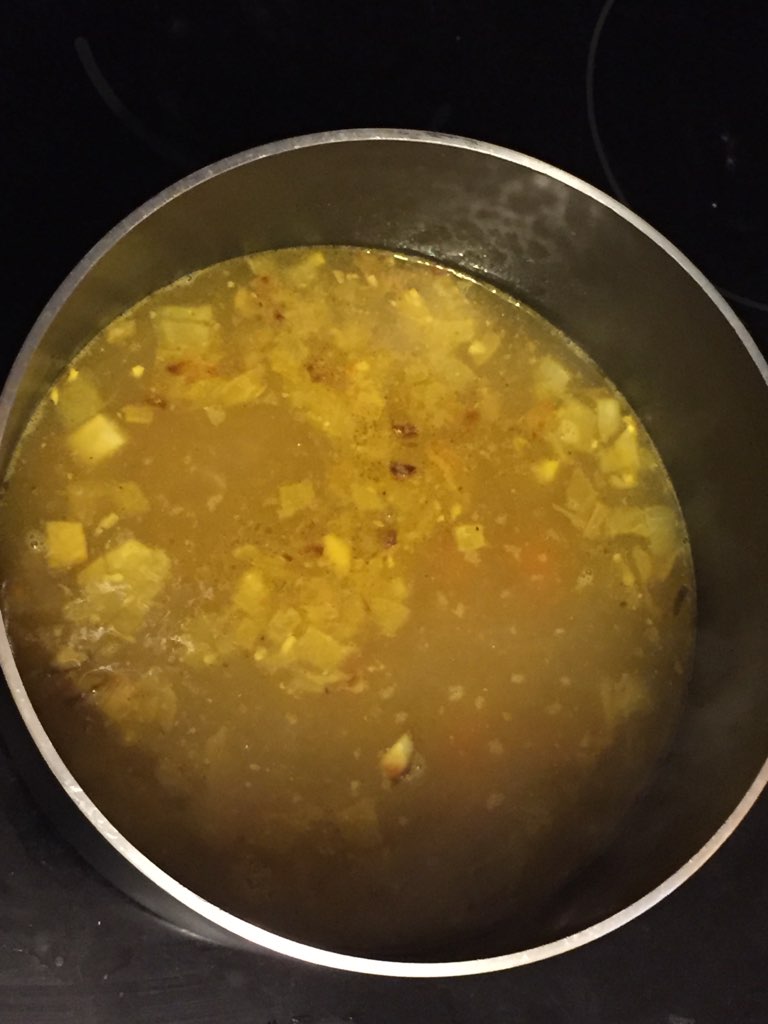
Place the roasted vegetables into a large pot. Take 1 cup of the broth and add it to the roasting pan. Using a spoon or spatula, try to scrape up any bits of flavor that may have been left on the roasting pan. Pour it into the pot, then add the rest of the broth and the water. If you are cooking with low sodium, you can add in the pinches of citric acid. Cook on medium heat until it comes to a slow boil. If you want a basic vegetable soup, it would be ready at this point. If you want to add things to it, then you can start adding them in. I added a couple of different things to this soup.

The first thing I added was a peanut butter sauce. In a small bowl, combine the peanut butter, vinegar (I used distilled white, but rice wine would also work), Teriyaki sauce and an optional hot sauce of your choice. Once these are all combined, they can be added to the soup.

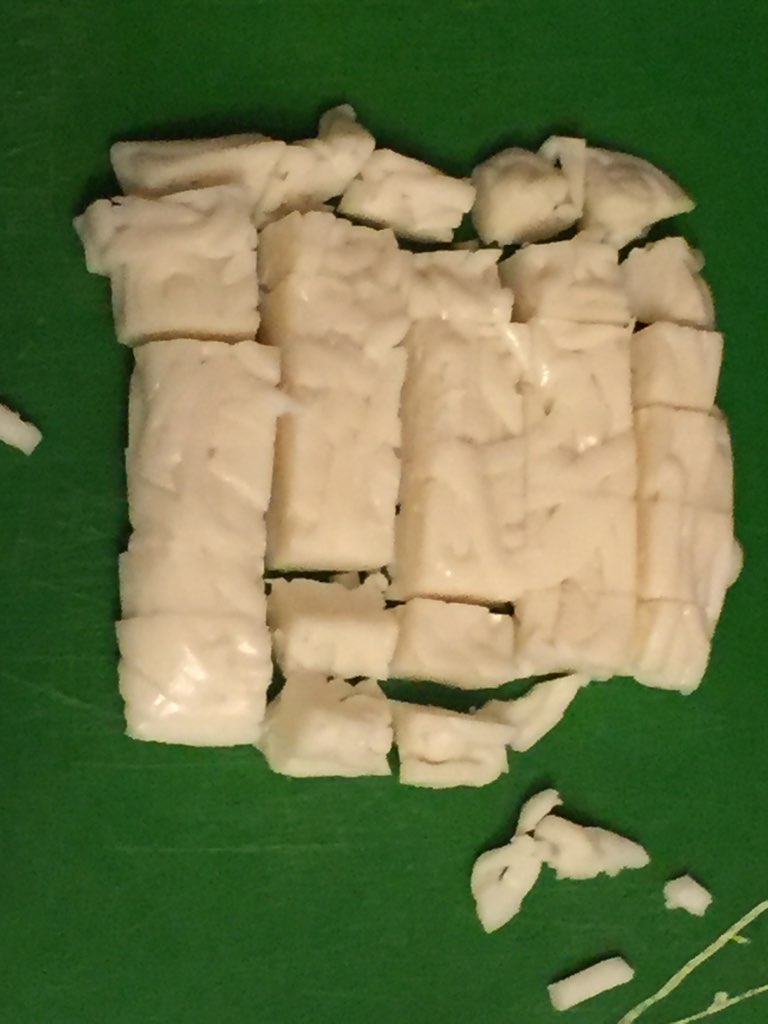
I also had a package of udon noodles. Cut them into cubes, so the pieces will be much smaller when cooked. After the peanut sauce is incorporated, let the soup get back up to a slow boil, and then add the noodles.

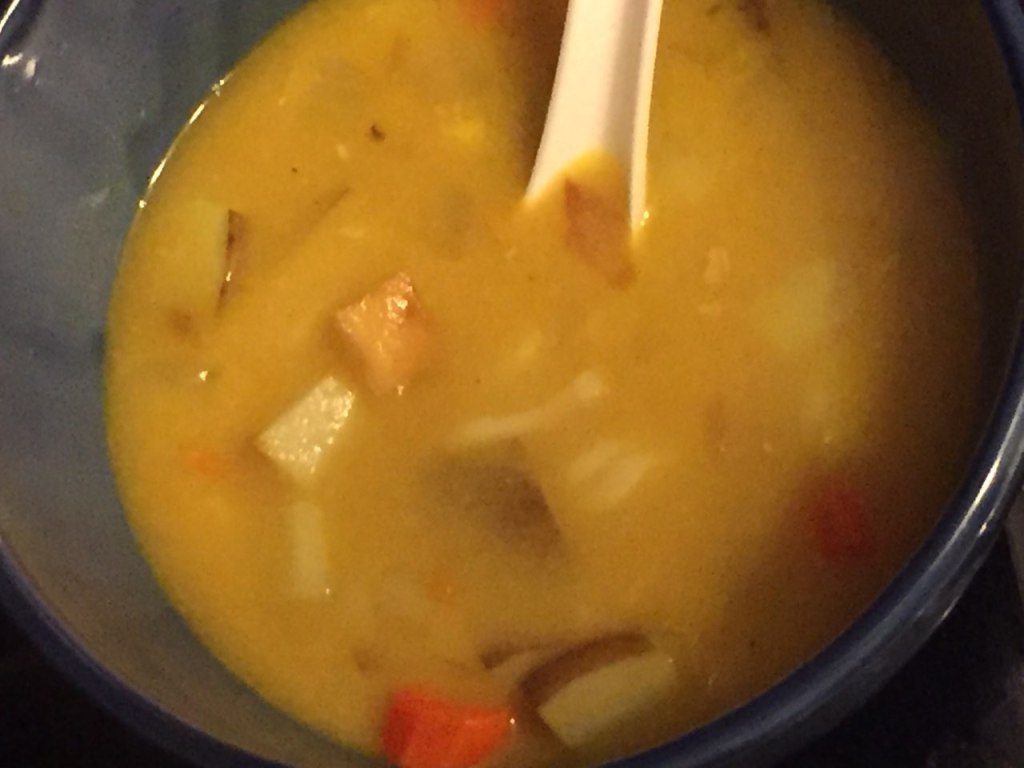
Once the udon noodles are added to the soup, it should cook for another 5 minutes. The cubes should be broken apart by that point. The soup will still be thin, but the color will change after the peanut butter sauce is added.

Once the noodles have been incorporated, the soup is ready to be served. The flavors of this soup really go well. The peanut butter sauce provides a nice kick to the soup, and it also has a nice balance with the noodles. There are bites of ginger, turmeric, and garlic that add a punch of flavor and freshness to the soup. The roasting of the vegetables help to add a bit of a deeper flavor than if they were boiled, and the outsides of the carrots and potatoes have a nice textural bite to them.

This soup put me in a happy place, and I look forward to eating more as the weather continues to get colder. Enjoy!

Homemade Chicken Curry

Yesterday, I managed to make good use of the leftover chicken from the Roast Chicken I had made on Sunday.

I made chicken curry. There were a couple of extra steps that I added, and I think that they worked for me. I didn’t do strict measurements for everything, so some of the measurements listed are going to be rough estimates.

INGREDIENTS, Part I (roast cashews):

1 cup raw unsalted cashews for roasting

INGREDIENTS, Part II (cashew curry paste):

1 cup raw unsalted cashews

1 piece of fresh ginger, roughly 2 inches long, roughly cut

1 piece of fresh turmeric, roughly 3 inches long, roughly cut

3 cloves of garlic, roughly cut

1/4 cup evaporated milk

1 teaspoon curry powder

INGREDIENTS, Part III (curry):

4 medium size carrots, cut into chunks

5 red potatoes, cut into small chunks

2 pieces of fresh turmeric, finely chopped

5 cloves of garlic, minced

2 pieces of fresh ginger, finely chopped

1 large onion, diced

1/2 stick of butter

2 Tablespoons olive oil

3 cups of chicken broth

12 ounce can of evaporated milk, minus 1/4 cup (for cashew curry paste)

3-4 cups of boiling water

1 Tablespoon plus one teaspoon curry powder

1 teaspoon ginger powder

1/2 roast chicken (cooked)

The first thing I did was roast the cashews. I preheated the oven to 350 degrees. I put one cup of cashews on a tray lined with aluminum foil and sprayed with cooking spray (I don’t think it really needs the cooking spray). Depending on your oven, this should take 10-15 minutes. Make sure to keep an eye on it, since you don’t want these to burn. Remove from the oven and set aside. Once these are cooled, place in a storage bag and run a rolling pin over them. This is what I used for a topping.

The next step was the paste. I put in the cashews, ginger, turmeric, garlic, curry powder, and evaporated milk into a blender and then blended until it got to a nice, thick consistency. If you want a spicier curry, feel free to add something that will give more heat to this mixture (more curry powder, more ginger powder, black pepper, cayenne pepper, hot sauce, etc.). Regarding the evaporated milk, I bought a 12 ounce can and used 1/4 cup in this mixture and saved the rest for later.

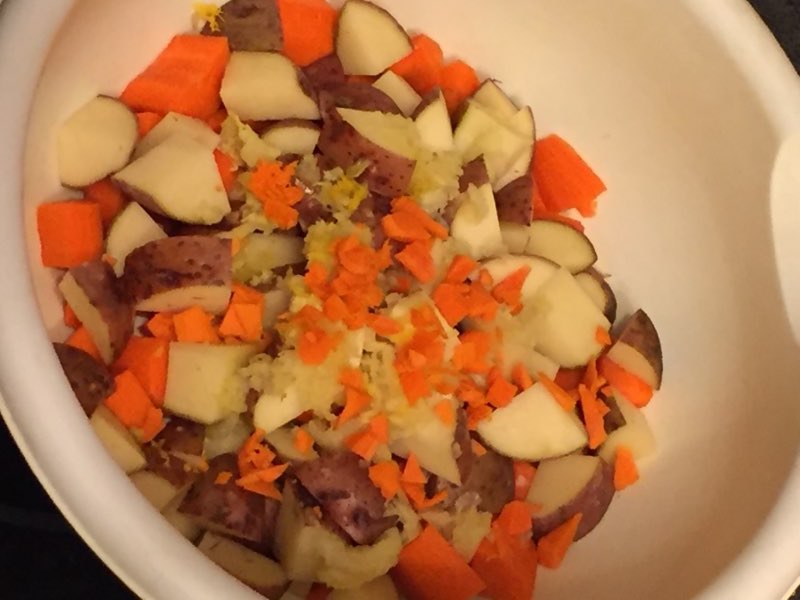
The next step is to prep the veggies. I cut the carrots, potatoes, ginger, turmeric and garlic and set aside in a bowl.

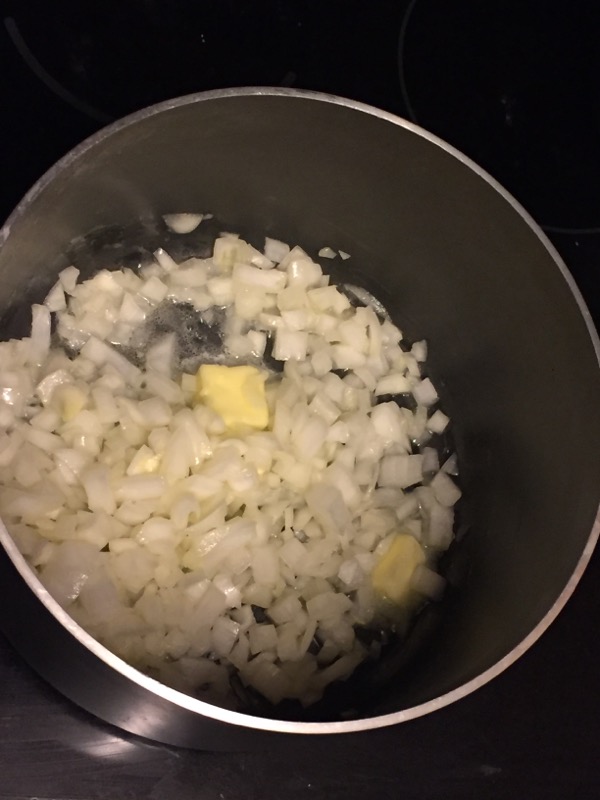
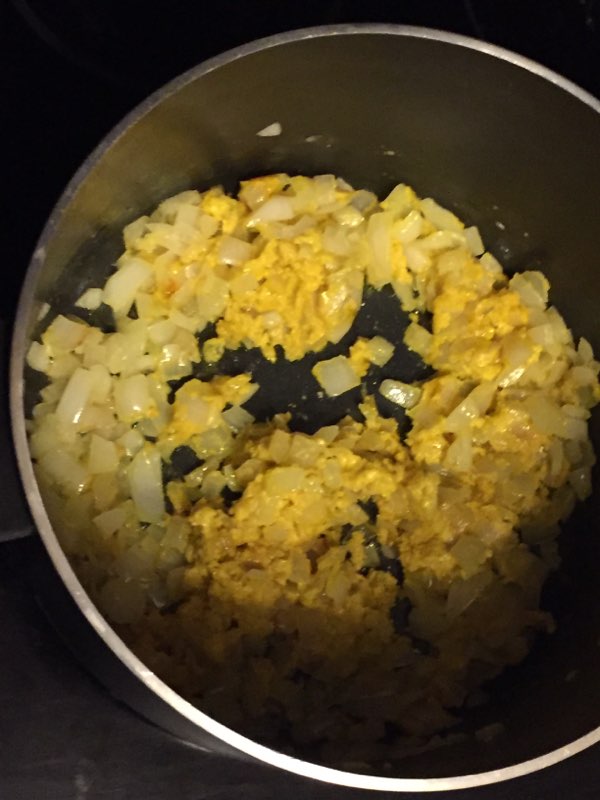
Start cooking the onions, butter and oil on medium-high heat.

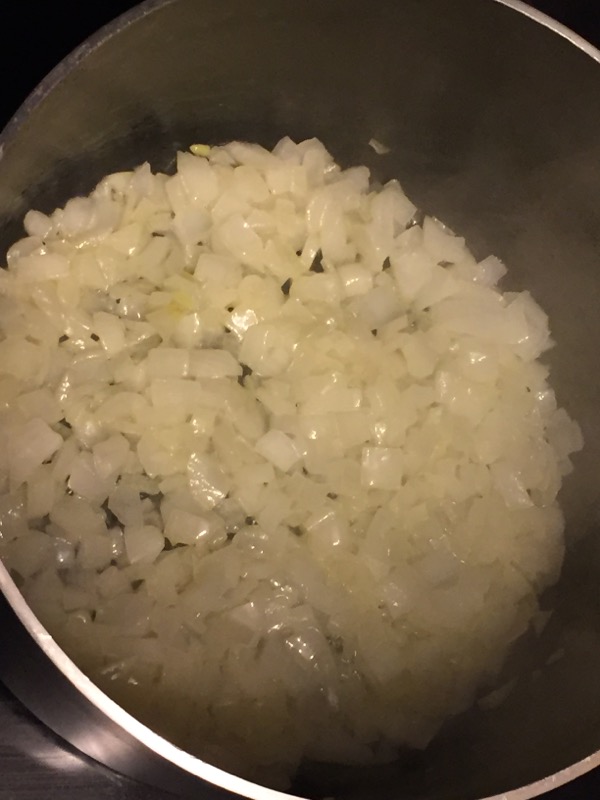
Stir often. Once the onions are translucent, you are ready for the next step.

Add in the curry paste mixture and start stirring until it is all incorporated.

Add in the veggie mixture, 1 Tablespoon curry powder, ginger powder, and the broth. Continue to stir until it is well incorporated, and then add in the rest of the can of condensed milk.

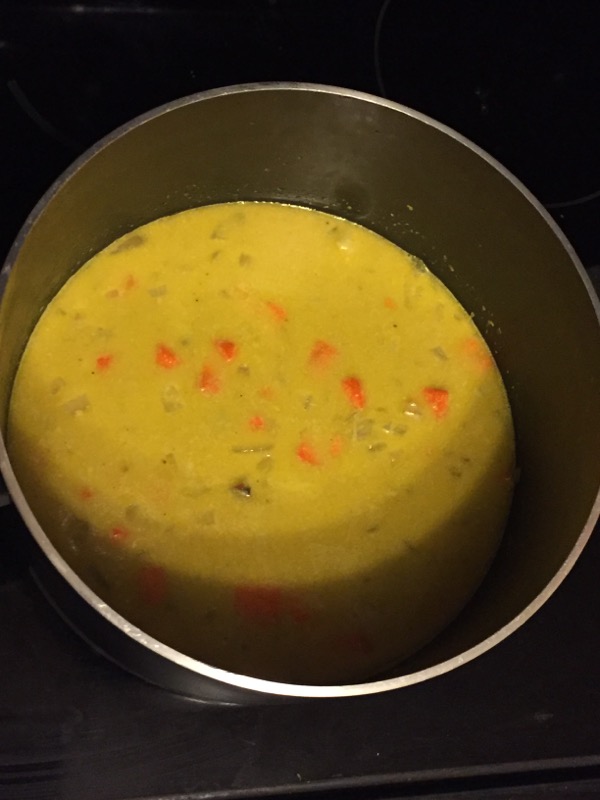
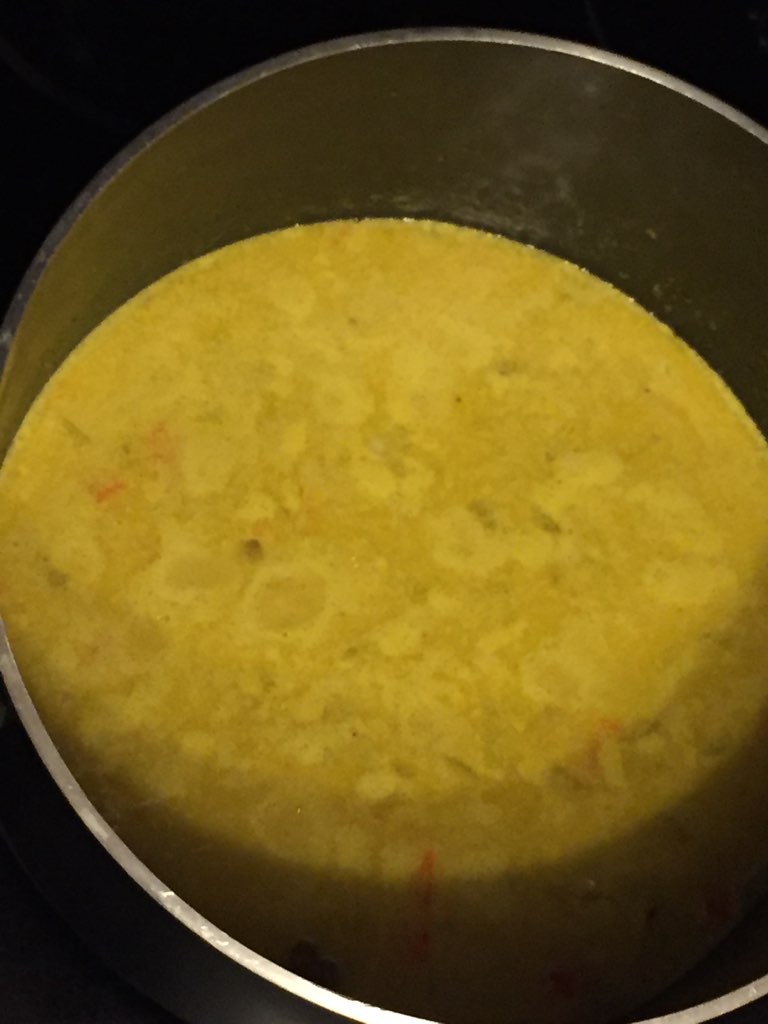
Bring this to a slow boil and then add in the water. If you prefer a thicker sauce, you can start with 1-2 cups and keep adding later until the desired consistency. Bring this to a boil again and then let it boil for 30 minutes, stirring often.

Stir in one teaspoon of curry and then add the chicken. Bring the temperature down to medium heat and cook for another 30-60 minutes, until the curry is the desired consistency. I waited about 10 minutes after I added the chicken and then started cooking the rice.

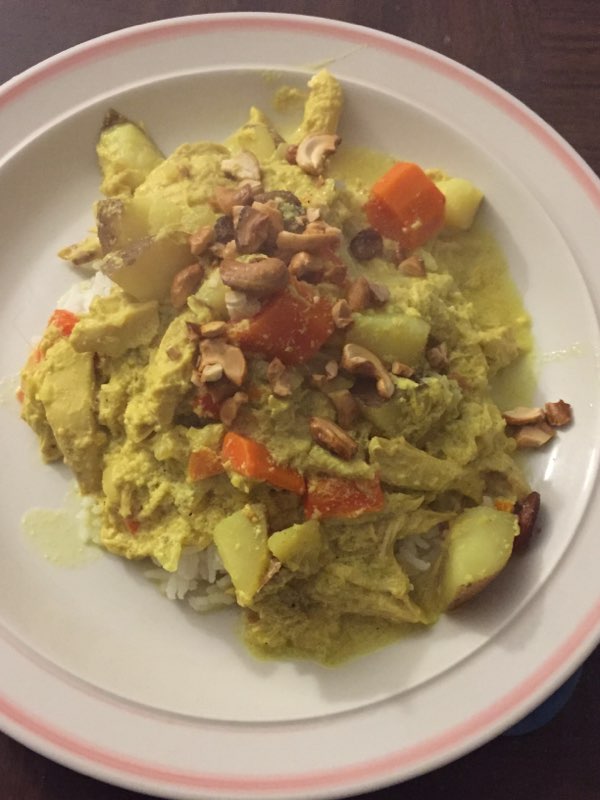
Once the rice and the curry are ready, you can plate your food. I prefer my sauce to be a little thinner on the first day, since it tends to thicken with time. I also like to have my curry over my rice, but if you prefer them side by side, then do that. I topped it with the rough chopped roasted cashews. You can have peanuts, hard boiled eggs, bacon, chutney, pickled veggies, hot sauce, etc. Whatever makes it unique to your tastebuds, I say go for it. I really enjoyed making this and eating this yesterday, and looking forward to eating the leftovers. A very positive Monday for me!

If you’ve eaten or made curry before, what types of veggies have you put in there? What kinds of toppings have you added? I’d be happy to hear from you.

Roast Chicken

There are times that I have a couple of meals planned out, so I start to buy the ingredients and think about how I can use them for a couple of meals. I did this yesterday and made a pretty good roast chicken.

INGREDIENTS

1 whole chicken – 5-6 pounds

1/2 onion, cut into rings

2 carrots, coarsely chopped

3 red potatoes, coarsely chopped

1 Tablespoon Poultry Seasoning

1 teaspoon black pepper

1 teaspoon Pink Himalayan sea salt

1 teaspoon garlic powder

1 teaspoon onion powder

1/4 cup orange juice

I preheated the oven to 300 degrees. I wanted this to cook at a lower temperature for a longer period of time.

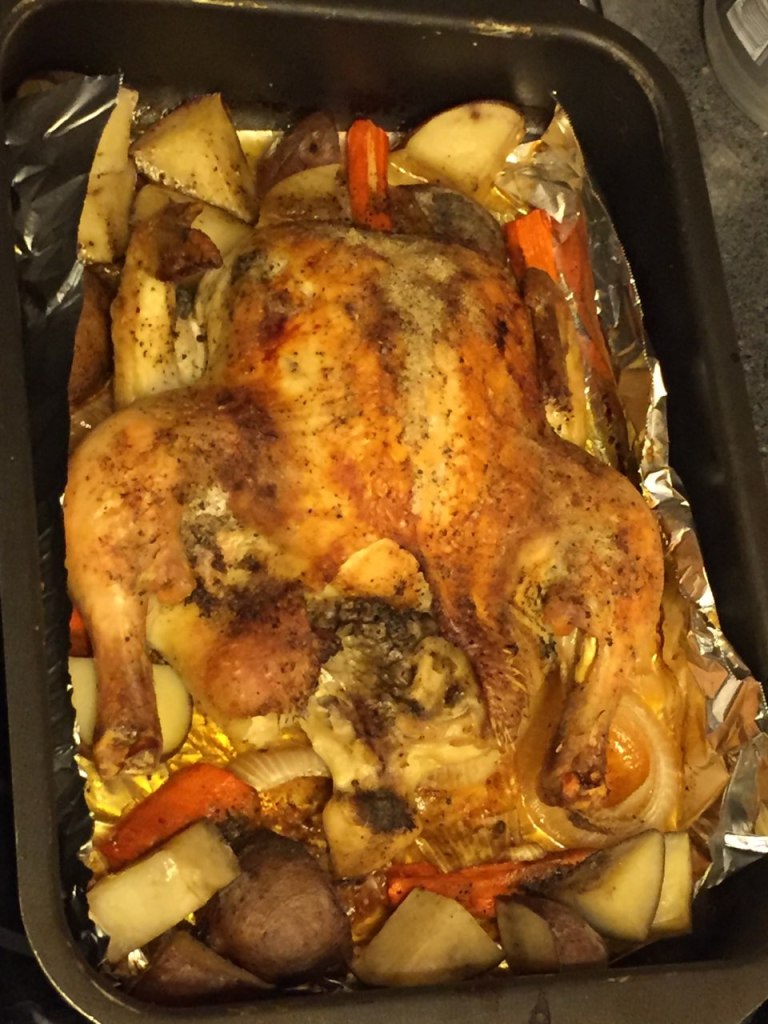
I started off by chopping the vegetables. I then placed them in a roasting pan that was lined with aluminum foil. I positioned the vegetables so that the chicken could rest on top of the onions, while the potatoes and carrots would be in the surrounding area.

The seasonings and orange juice are all rough estimates. After removing the bag of giblets, I made sure to rinse and pat the chicken dry before placing on top of the onions. I then poured over the orange juice, making sure it got on the back and front of the bird. I put the seasonings into a small bowl and mixed them up. I then put rubbed them into the back, the front, the inside cavity and a little under the skin.

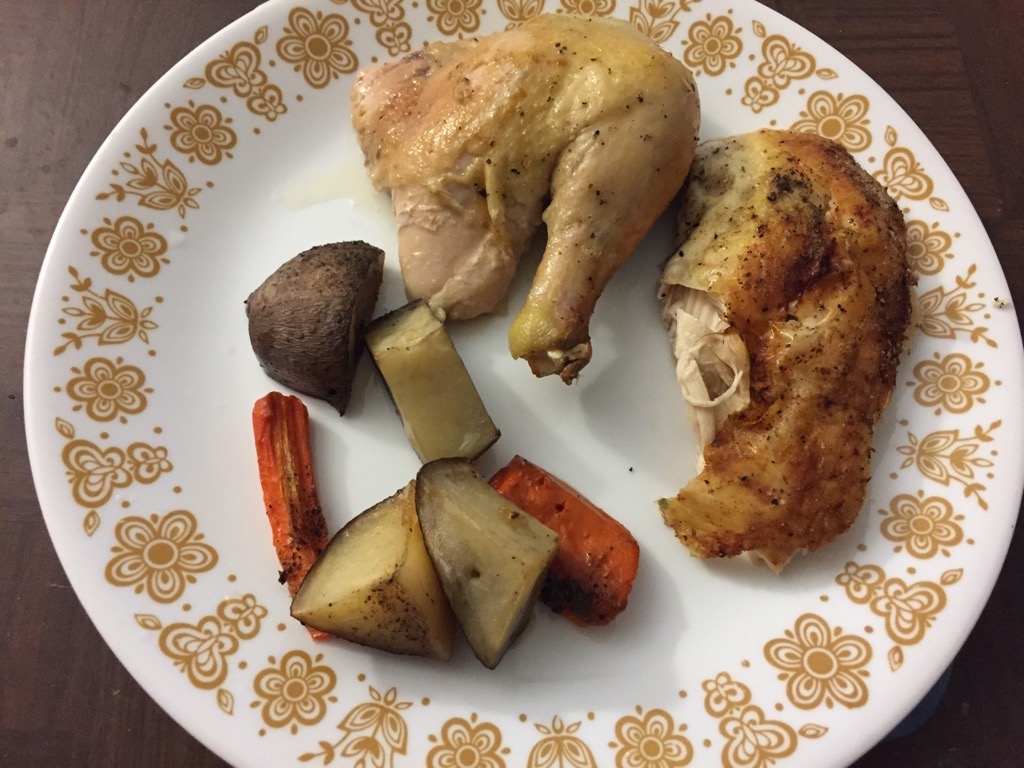
I baked the chicken for about three and a half hours. The meat was fall off the bones tender, juicy, and full of flavor. The skin was nice and crispy, with a robust flavor from all the seasonings. The potatoes and carrots were soft and pleasant tasting. The onions were really sweet and rounded out the meal very well.

I made two different broths from this chicken. The first broth was made using the giblets from the bag. I boiled those on medium-high heat in about 3 cups of water, with some diced fresh ginger, diced fresh garlic and diced fresh turmeric added. Once this got to a boil, I let it boil for 20 minutes and then turned the temperature down to medium-low heat. I let this continue for another 30 minutes and then it was ready to save.

The second broth was made after the meal was over. I removed the meat from the bones and set aside for a separate dish. I used a pasta pot, since it has a strainer. I put the bones in the strainer and then added water until it was covering all the bones. I boiled this on medium-high heat. Once this got to a boil, I let it boil for 30 minutes and then turned the temperature down to medium-low heat. I let this continue for another hour and then it was ready to save. Since this had flavor from the chicken bones (with some skin and seasoning still in tact), I did not feel the need to add anything else to the broth. I saved some of the broth in the refrigerator, and put the rest in storage bags in the freezer. These will provide me with some quick broth for a future meal.

The flavor of the chicken was much better than I was expecting, and I was very happy with how tender the meat was. It was an easy way to keep me staying positive!

Cashew Curry Cookies

I’ve made these cookies a couple of times. The batch I made yesterday included a lot more butter (1 stick more) than usual, but I think that it worked well and I wanted to share.

Ingredients:

1/4 cup powdered sugar

2 1/2 sticks (20 Tablespoons) softened butter

1 1/2 Tablespoons sugar

1/4 teaspoon salt

1 1/4 cups flour

1/4 cup corn starch

2 teaspoons curry powder

1 cup roughly chopped cashews (unsalted, raw is preferred)

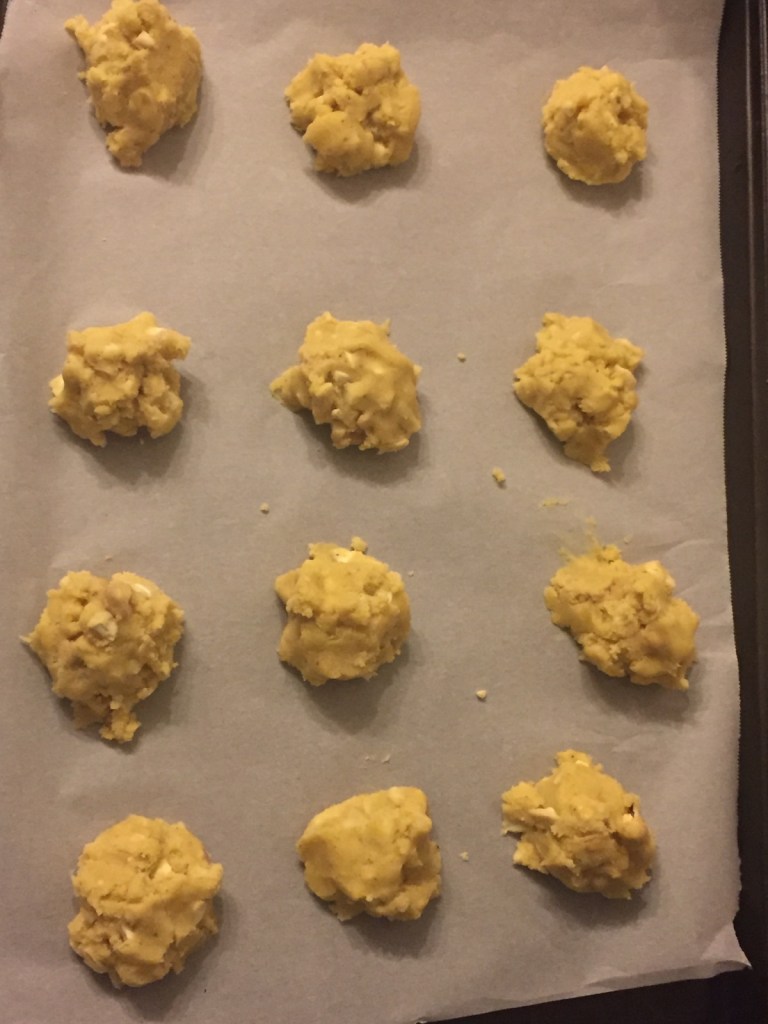
Preheat the oven to 300. Mix the powdered sugar, butter, sugar and salt until the mixture is creamed and fluffy. Sift in the flour, corn starch and curry powder. Knead together in the bowl until a ball of dough forms. FYI, this is going to be a very sticky dough. If the dough is dry, add a couple of drops of water until all of the dry mixture is incorporated. Add in the chopped cashews and mix together (I put whole, raw, unsalted cashews in a lightly sealed bag and use a rolling pin to get it to be a rough chop). Place by spoonfuls onto a cookie sheet (I line mine with parchment paper).

When they are all on the cookie sheet, you can form them or make them into shapes if you would like. Bake for approximately 45-50 minutes, rotating once halfway through.

There should be a nice brown coating along the bottom edges of the cookies.

This cookie is very rich and flavorful. You have the rich buttery flavor, the subtle curry flavor, and the smooth flavor of the cashews, with a little bit of a crunch. The cookies will break apart easily, but they almost melt in your mouth. Even though this has 2 teaspoons of curry powder, it’s not an overbearing flavor. This is a sweet cookie with hints of savory. Since it breaks apart, the cashews help hold it together, and they also add a nice combination of flavor with the curry.

I’ve made the South American version of Alfajores before, and the corn starch and flour combination give those cookies their texture. That is the reason I wanted to have some corn starch in these cookies. If you would prefer to do without, just make sure to adjust the recipe and add an additional 1/4 cup flour instead of the corn starch.

I had two bonuses with this batch. The first was the parchment paper after the cookies were removed. There were little brown butter crumbs which had an extra layer of flavor. The other bonus was the aroma. I enjoy the smell of curry, and it was all over the house. And when you are getting ready to bite into these cookies, the slight smell of curry goes into the nose and invites an extra layer of sensory enjoyment. It’s easy to stay positive when eating these!

Homemade Pierogi

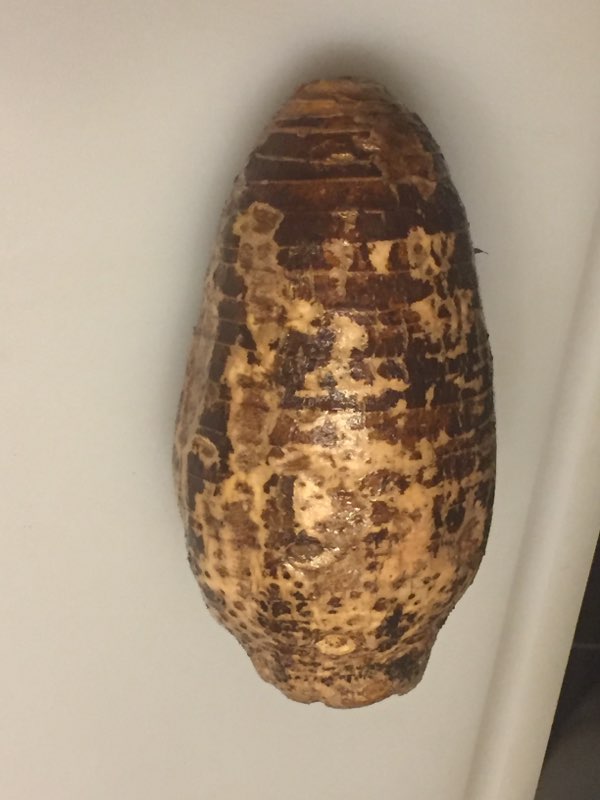
I still had some leftover malanga, and I had it in my head to try and make a variation of pierogi that used mashed malanga instead of potatoes. There are three separate components that are part of this recipe: caramelized onions, mashed malanga, and the dough and pierogi. The caramelized onions and mashed malanga are good independent of this dish, but work well together for this. I am going to share how I put this together.

I will start with the caramelized onions, then move on to the malanga, and then move on to the pierogi. If timed well, the dough can be the first thing made, then the onions and mashed vegetable, and then the pierogi. There is a good flow when putting it together, but I’ll focus on the separate recipes.

CARAMELIZED ONIONS

1 medium size yellow onion, chopped

1 Tablespoon butter

1 Tablespoon olive oil

Pinch of salt (optional)

Pinch of sugar (optional)

1/4 cup of water (optional)

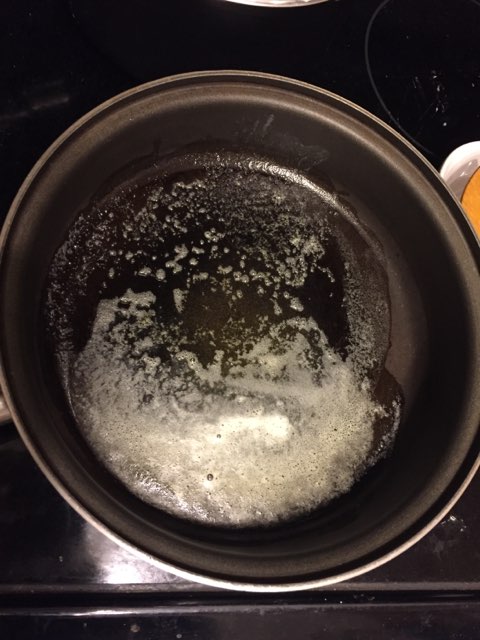
Place the butter and oil in a large saucepan over medium high heat. Once the butter has melted and the mixture has some foamy bubbling, add the chopped onion and turn the heat down to medium.

Make sure the onion is layered evenly on the bottom of the pan. Stir every 2-3 minutes. The entire process should take between 30-50 minutes.

When the onion starts to get a little brown, add the dash of salt if desired. Continue to stir every 2-3 minutes.

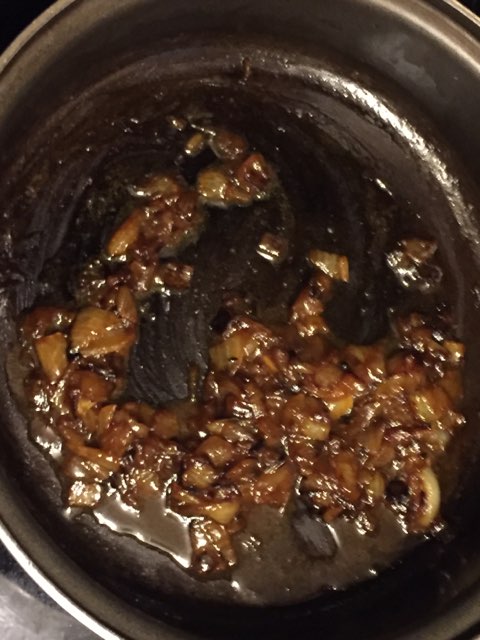
Once the onions have gotten a deeper brown, you can add 1/8 cup of water and a dash of sugar if desired and turn heat to medium low. Continue to stir every 2-3 minutes. The stirring should allow for enough time for the onion to brown without burning or sticking to the bottom of the pan.

Once the onions have some really nice caramelization going, add a little more water to prevent burning. After another 2-3 minutes, the onions should be done and ready to be removed from the stove.

MASHED MALANGA

1 1/2 pounds malanga, chopped

1/4 cup softened butter

1/4 – 1/2 cup milk

1 teaspoon garlic powder (optional)

1 teaspoon onion powder (optional)

1/8 teaspoon pepper (optional)

2 teaspoons paprika (optional)

1 cup shredded cheese (optional)

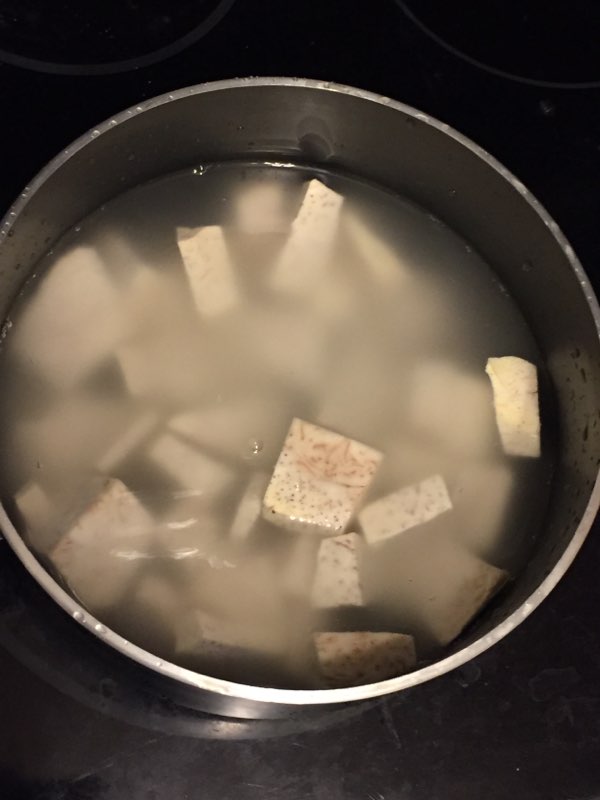
Malanga is a very hard root, so be very careful when cutting. Remove the outer skin and cut the malanga into pieces. Rinse well. Put into a pot and fill water so that it is about 1 inch above pieces. Bring to a boil and let it continue to boil for about 15 minutes. When the largest pieces of malanga fall off a fork with ease, the malanga should be ready (should be similar to boiling potatoes). Drain water and put malanga back in pan.

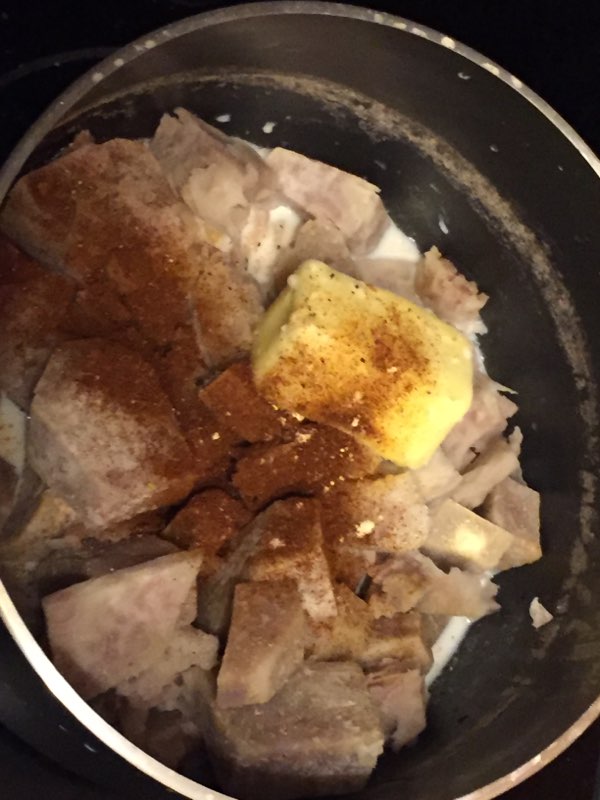
Add in butter, milk and any seasonings you would like and then mash until it gets to the consistency of mashed potatoes.

For the next step, I added in about 2/3 of the caramelized onions (leaving the rest for something else, possibly a patty melt). I let the mixture get to room temperature and then added in the cheese. I did not want the cheese to melt yet, but if you would prefer to have melted cheese, then you should do it. I preferred to have the cheese intact because I didn’t want to have to deal with the melty cheese when trying to scoop it into the dough (coming later). If you didn’t want to make pierogis, this would still be an outstanding dish as is. The caramelized onions really take this to another level. I heated some up later and my opinion is that it was absolutely delicious. If you are going to be making the pierogi, then this mixture should be at room temperature when the dough is ready.

PIEROGI DOUGH

2 cups flour

1/2 teaspoon salt

1 large egg

1/2 cup sour cream

1/4 cup softened butter

Mix together the flour and salt. Add the egg and mix together. It will be mostly flour, with a few lumps. Add in the sour cream and softened butter. I started this with a fork, to make sure the butter gets properly incorporated. Once the butter was broken down and blended in, I used my hands. Work the dough with your hands until it is able to hold together in a ball. If the dough is too sticky, add a little flour. If it’s too dry, add a little sour cream.

Once the dough is able to be formed into a ball, cover it in plastic wrap and place in the refrigerator. This should be refrigerated for no less than 30 minutes, but can be kept for up to 2 days.

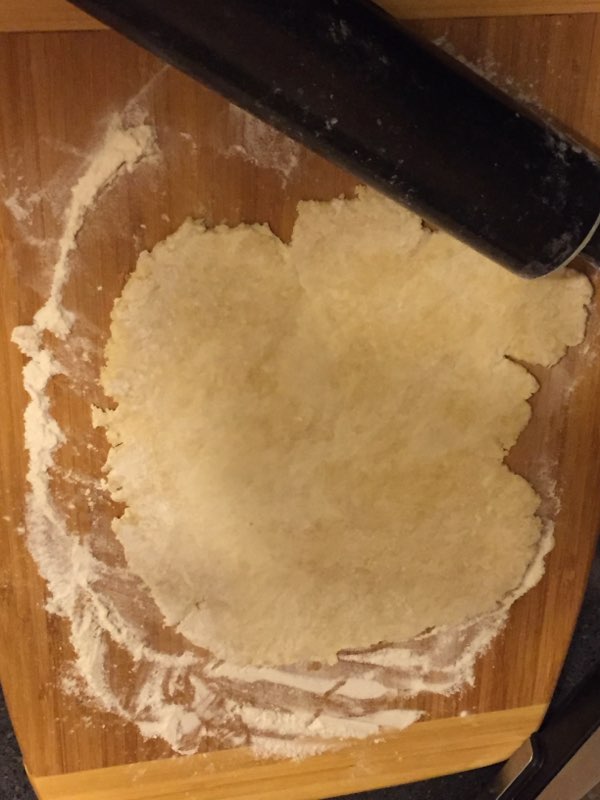
Once you are ready to make the pierogis, remove the dough from the refrigerator and roll out 1/2 of the dough until it’s a little more than 1/8 inch thick.

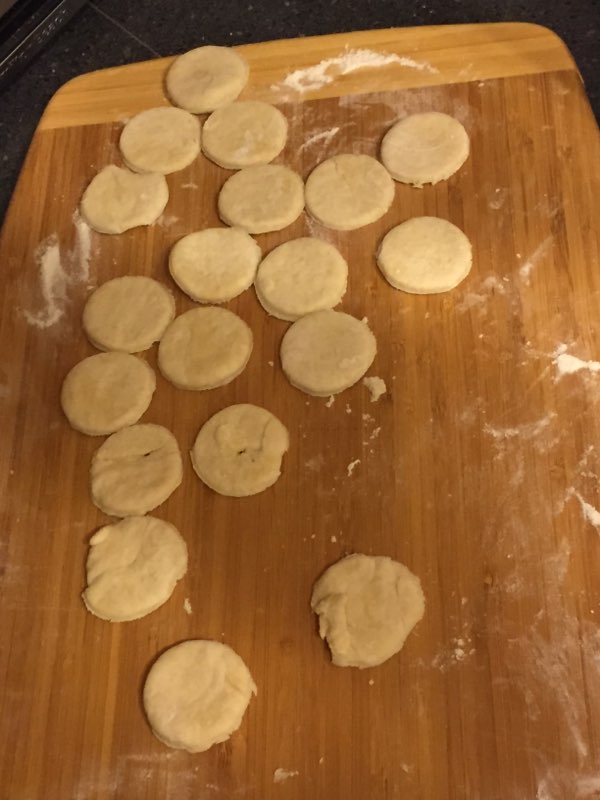
If you want, you can roll the dough to be 1/8 inch thick and then use a two inch round cutter. I rolled the dough until it was slightly thicker than 1/8 inch, and then used a shot glass to cut the dough.

I then took each shell and rolled them a little more to get them flat.

Next, add about 1/2 teaspoon of the mashed malanga mixture into the center of the shell.

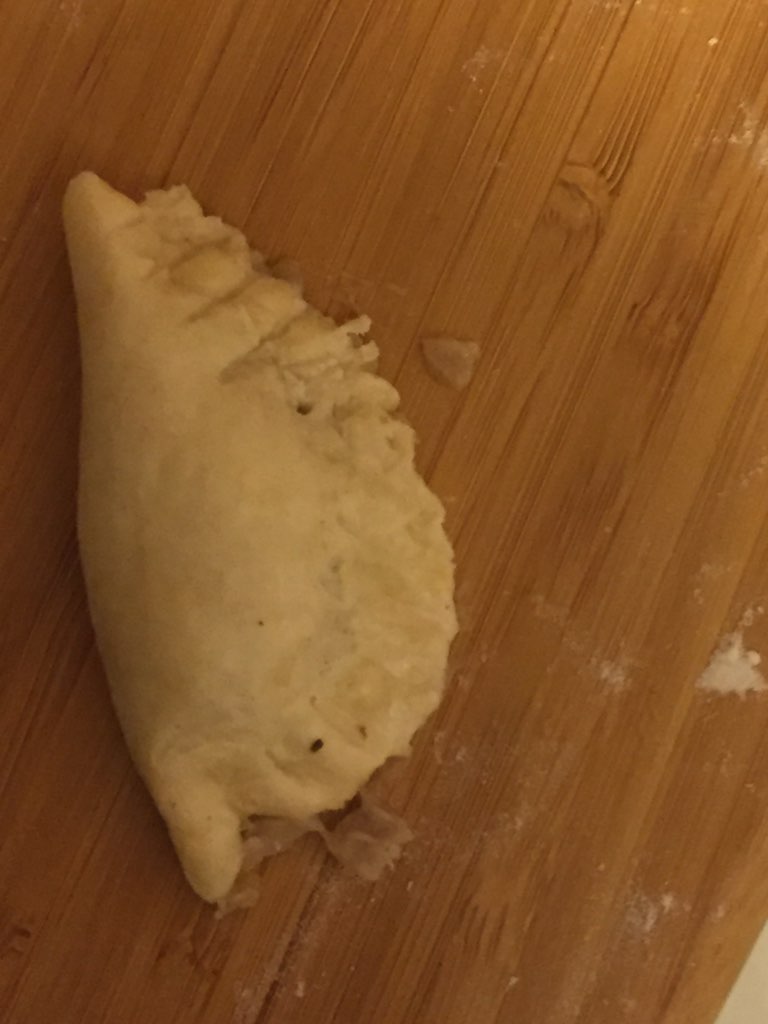
Fold the shell over and pinch the edges together.

Use a fork to seal it again. If a little bit of the filling sticks out, that’s okay.

Once you have the first half of dough complete, you can start working on the second half. This should yield 3 – 4 dozen pierogi.

Boil a large pot of water and add in salt. Place the pierogi in the boiling water. Make sure there is enough space that they don’t overlap (otherwise, they might stick together).

These should take 5-10 minutes to cook. They will float to the top when they are ready. I took them out as soon as they started to do a little dance.

They are now ready to enjoy. I had sour cream as a side for my first batch and butter for my second. The flavor is really good, so I prefer that it is not masked with anything overpowering, but that is my personal choice. The flavors all came together really well in this batch. It tasted a lot better than what I was expecting, so it was a nice surprise.

If you don’t want to cook the pierogi all at once, you can refrigerate the uncooked pierogi for another day, or you can freeze for a few weeks and then take out and boil when desired. If you didn’t use all the dough, you can always set it aside for another day and make something else (maybe cut them up and cook them in a nice broth based soup during the cold Fall and Winter months).

These can be filled with different things. I chose my ingredients because they fit the flavor profile I was craving. Some might prefer sauerkraut. Some might want the onions to be used as a topping instead of as part of the filling. There are many options out there. Just choose what works best for you.

I hope you enjoyed this recipe. Any feedback or thoughts are happily appreciated.

Stay Positive!

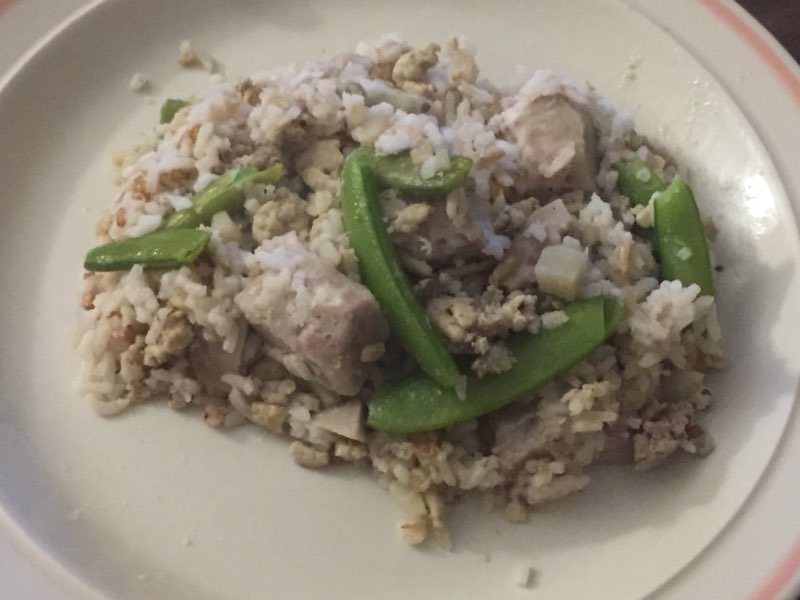
Rice, Veggies, and Chicken Dish

As you may have figured out by now, I truly enjoy food. I go to different places and try different foods. I also like cooking and preparing my own meals from time to time. Today was one of those days. I had an idea for what I wanted to make, but it was a matter of getting some special ingredients and having a good block of time to be creative.

Here are the Ingredients for today’s dish:

1 1/2 lbs malanga

1 lb sugar snap peas

8 ounce can – diced water chestnuts

1 pound ground chicken

1 1/2 cups rice

3/4 cup multi-grain

6 cups water

1/4 teaspoon allspice

1/8 tsp cumin

1/8 tsp nutmeg

1/8 tsp cardamom

1/4 tsp dried marjoram

1/4 tsp dried rosemary

3 Tablespoons Sesame oil

There was a nice flow to the preparation of this dish. Malanga is a root vegetable that is similar to taro. The cooked flavor is similar to a potato (I think it’s in between a potato and sweet potato). This is a very difficult vegetable to cut, so please use caution when cutting. I cooked the malanga with the rice, so I wanted to make sure it was cut up in bite-sized pieces to make sure it would cook properly in the rice cooker. Rinse before you start cutting, make sure the outer skin is removed, and then rinse again after the malanga has been cut into bite sized pieces.

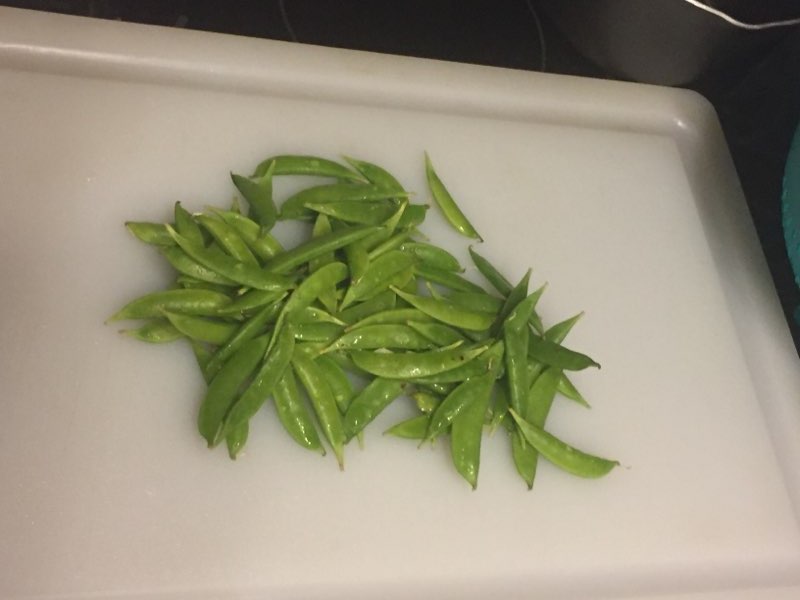
The next bit of prep work was for the sugar snap peas. These took a bit longer than expected, so I’m glad I did them first. I rinsed the peas first. Next came the preparation. You need to take off the ends and slide them along to remove the membranous string. This is the part that takes the longest. Once the preparation is complete, rinse again.

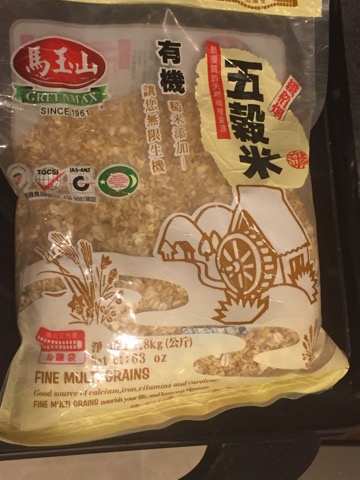
Next is the cooking of the rice. I added the rice and the multi grain mix (the picture is the one I like to use). I then added the water and swirled it all around. I put in the cut up malanga and then swirled the water around again. I set the rice cooker to cook. This should take 20-25 minutes, depending on the rice cooker, which leaves you plenty of time to prepare the rest.

I started by putting the sugar snap peas in a wok with a little water. I cooked this for about 5 minutes. I didn’t want to overcook the peas, and I knew they would do some more cooking later on. I removed them and the water from the pan.

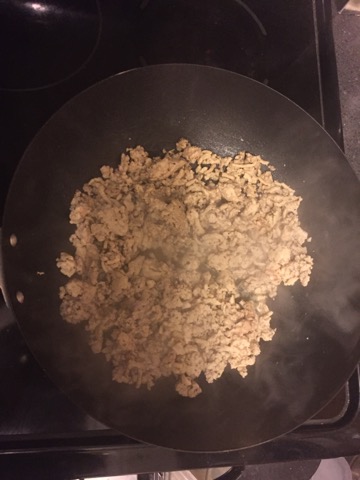
The next step was cooking the ground chicken. Once it was completely cooked through, I removed the fat.

I then added in the can of diced water chestnuts, including the liquid, and mixed these together. If you would prefer to remove the liquid, then that will work as well.

I added the sugar snap peas and mixed them in. I then reduced the heat to medium low and let it continue to cook while the rice was still cooking (about 10 minutes).

Once the rice cooker clicked off, I added allspice, cumin, nutmeg, cardamom, marjoram, and rosemary to the chicken and veggie mixture.

When the rice finished giving off steam, I opened the lid to make sure it was looking good. The malanga has a slightly purple color (I think taro is usually a bit of a darker purple).

Next is the combining of the meat and veggie mixture with the rice mixture. Once these have been combined well, drizzle in three tablespoons of Sesame oil and give it another stir.

The end result was delicious. You can definitely use different veggies and different seasonings to make it your own. Sometimes when I cook, I try to find lower sodium alternatives, so I don’t always add salt. But if that’s something that you enjoy doing, then you should do it. When I make this again, I’ll probably add some minced garlic and minced ginger. I added some specialty sauces to a couple of bites, but it was good without them as well. The ground chicken flavor wasn’t prominent throughout, which meant that it went according to plan. There are times when one portion of the dish will overpower everything else in terms of flavor. I prefer having an overall balance, where you can have individual bites to taste how each component stands out, but when eaten altogether it just provides a special greeting to the tastebuds.

I hope you try this dish and give it your own unique spin. If you do, I’d love to hear about how you made it and how it all worked out.

Go back

Your message has been sent

Warning
Warning
Warning
Warning

Warning.

Stay Positive!

Flourless Peanut Butter Cookies

I have been making these cookies for 15 years or so and they never disappoint.

When I would bring these in to work in the past, they went quickly. I had to start making double and triple batches, since these are tough to stop at just one.

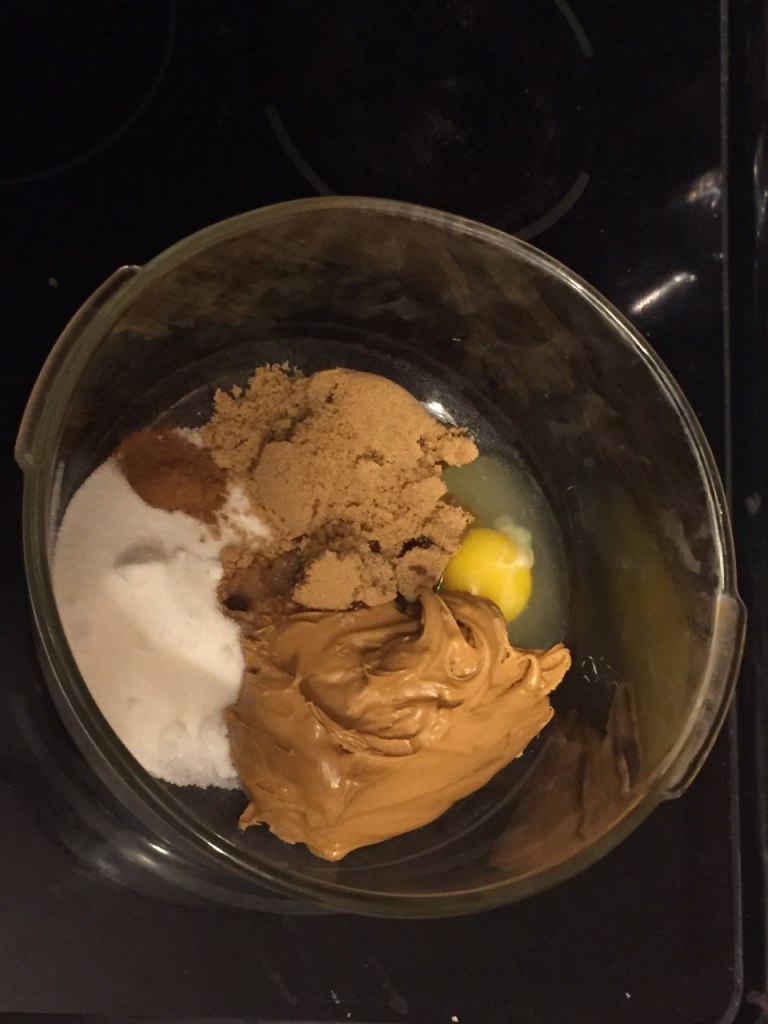
Here are the basic ingredients:

1 cup smooth peanut butter

1/2 cup brown sugar

1/2 cup sugar

1 egg

1 teaspoon vanilla

1/2 teaspoon cinnamon (optional)

Preheat the oven to 325 degrees. Put all the ingredients in a bowl and mix until well blended. I wanted to share the picture above because there are not a lot of ingredients to this, and the preparation for this will not take a lot of time.

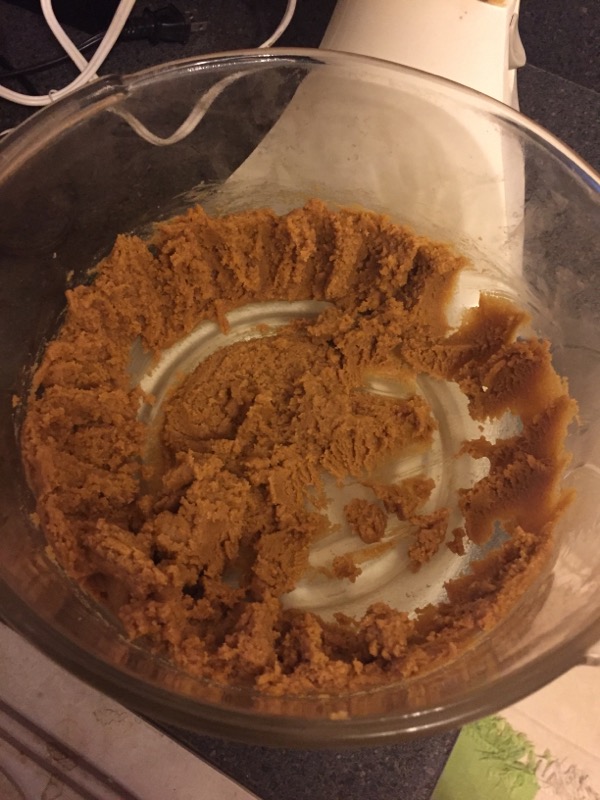
Once the mixture is blended, it should look similar to the above picture.

Roll into small balls and place on an uncreased cookie sheet (or using parchment paper or silpat liners). I use a medium cookie scoop for this. It should yield anywhere from 1 1/2 to 2 dozen cookies.

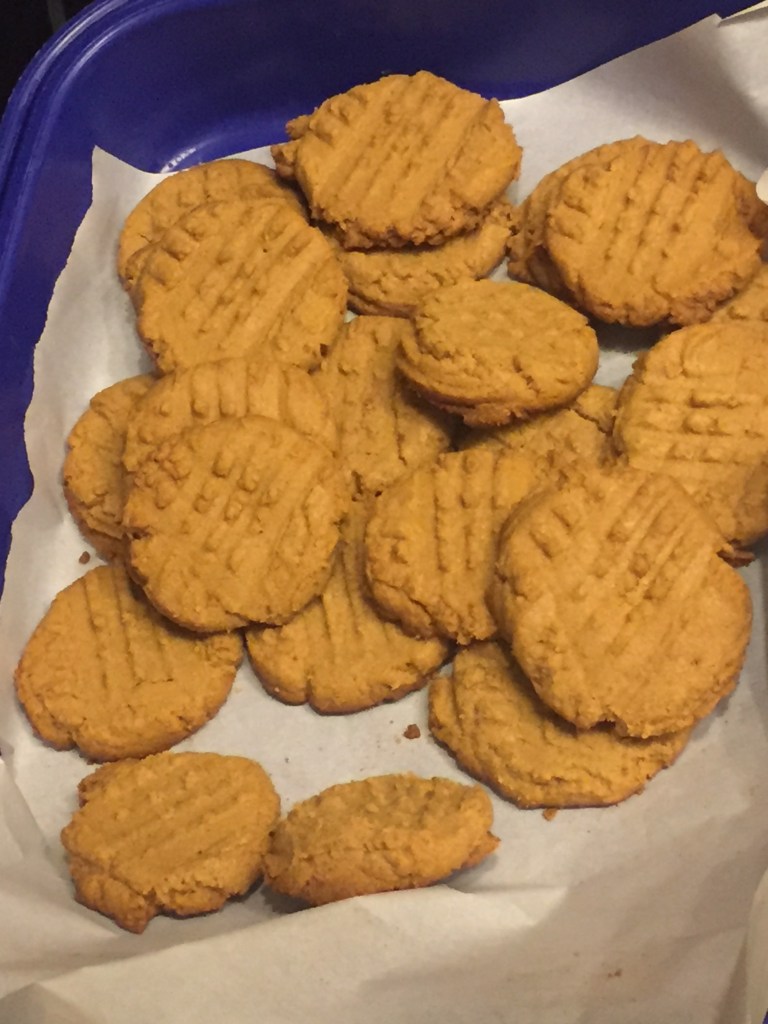
Next step is to press down with a fork to get the traditional peanut butter cookie look. Once the oven is ready, bake the cookies for 16-20 minutes (I rotate once half-way through).

Once cooled, these cookies are ready to eat.

I’ve always had a lot of fun making these cookies. They smell great while they are cooking and when they are sitting around waiting to be eaten. They aren’t a seasonal cookie, so they can be made year round. The recipe is pretty simple and it is not time consuming.

I made and brought these cookies to a few different companies I worked for, and they were always a hit. Not everyone likes peanut butter, but the people who like these cookies REALLY like these cookies.

I once overcooked a batch – they weren’t burned, but they were very crispy. I was telling my co-workers about the batch, since I didn’t bring them in, and one of my co-workers requested them. When I brought them in, he devoured them. He loved crispy cookies, so they were right down his alley. I share this story for one simple reason: Even though you may not like something you’ve made or tried to make, it doesn’t mean that someone else won’t like it. My co-worker would have been deprived of those had I not shared the story of my mistake with him. And when I made future batches, I would leave a handful of cookies in the oven an extra minute or two, just so he could have them the way he preferred.

Enjoy!

Cooked Grated Vegetables

I have a tendency to eat a lot of meat and to not always eat healthy. There are times, though, when I want to switch things up. I’ve made a variation of this dish in the past, but I was really happy with the results for tonight’s dinner. This is a vegetarian, low-sodium dish. I eyeballed some of the spices, but will put down my best guess estimates for the portions that I used.

Ingredients – Rough estimates

1 pound carrots

1/2 pound onion

2 pounds potatoes

1 5 ounce bag baby spinach

1 Tablespoon Olive Oil

1 Tablespoon butter

1 teaspoon chopped ginger

1/2 teaspoon garlic powder

1/2 teaspoon turmeric

1/2 teaspoon ground coriander

1/4 teaspoon pepper

1/4 teaspoon caraway seeds

1/8 teaspoon of citric acid.

I used the grater attachment for my Cuisinart and grated 4 large carrots, 1 yellow onion, and 2 large potatoes.

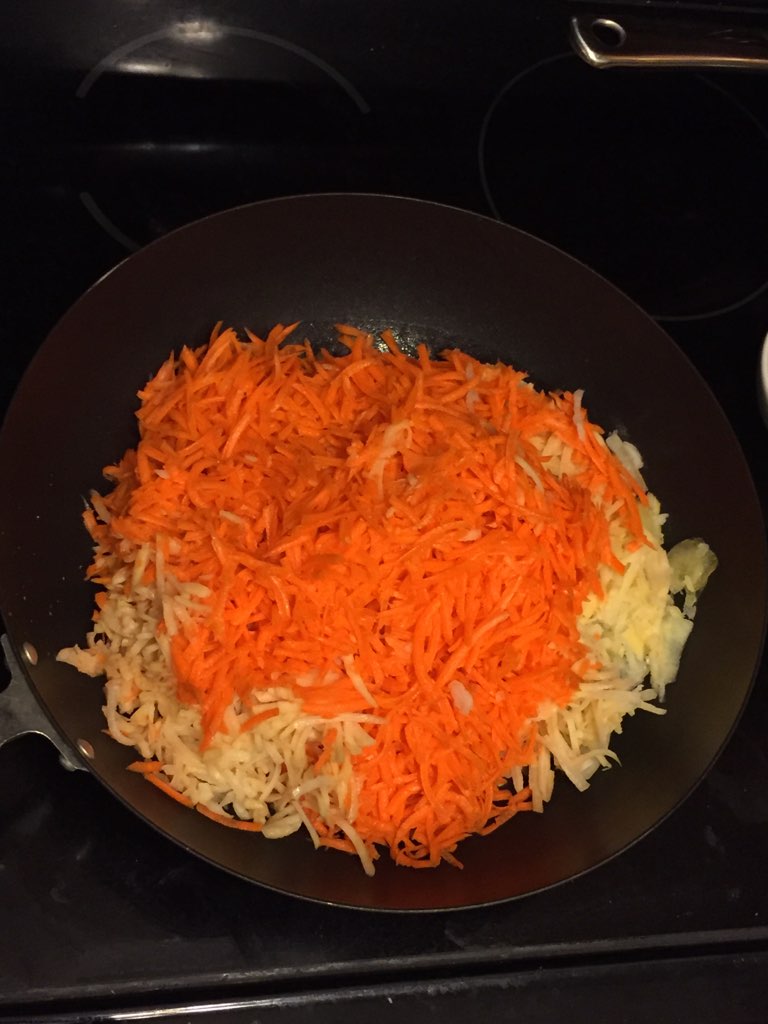
I heated one tablespoon olive oil and 1 tablespoon butter in a wok. Once the butter was completely melted, I added the grated vegetables.

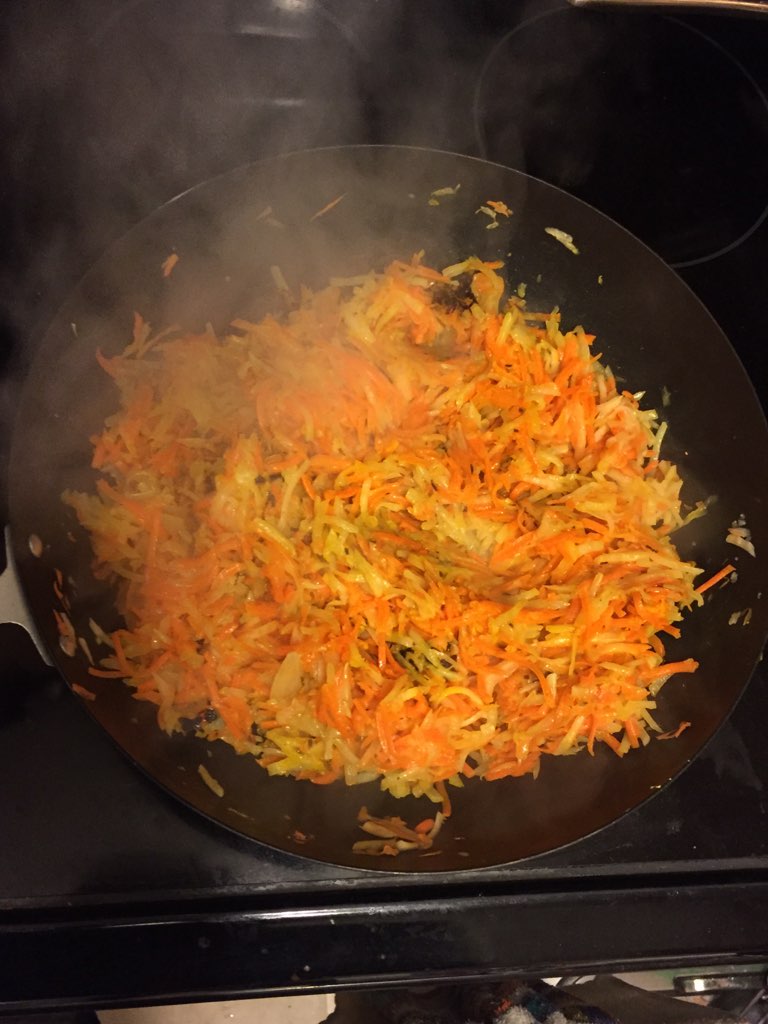
I continuously stirred the vegetables for about 10 minutes. The carrots and potatoes were still a little firm, but they were definitely getting closer to the proper texture.

I then added 1 teaspoon of chopped ginger (from a jar), 1/2 teaspoon garlic powder, 1/2 teaspoon turmeric, 1/2 teaspoon ground coriander, 1/4 teaspoon pepper, 1/4 teaspoon caraway seeds and 1/8 teaspoon of citric acid. I continued to stir for about 2 minutes, until there was a consistent release of steam.

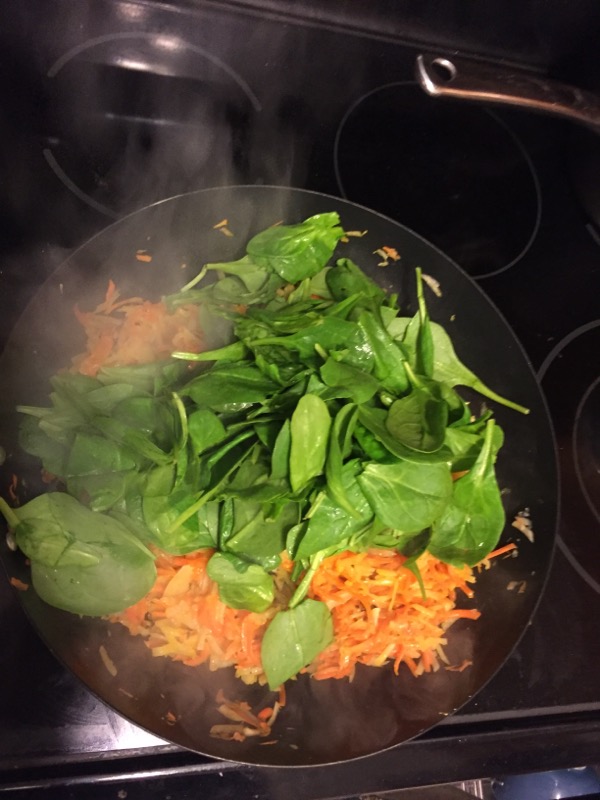
I then added one bag of baby spinach (I rinsed the spinach first, and shook out all of the water) and continued stirring for another 3 minutes.

Once the spinach leaves lost their stiffness, I removed from the heat. The spinach would continue to cook, but would not get overcooked and mushy.

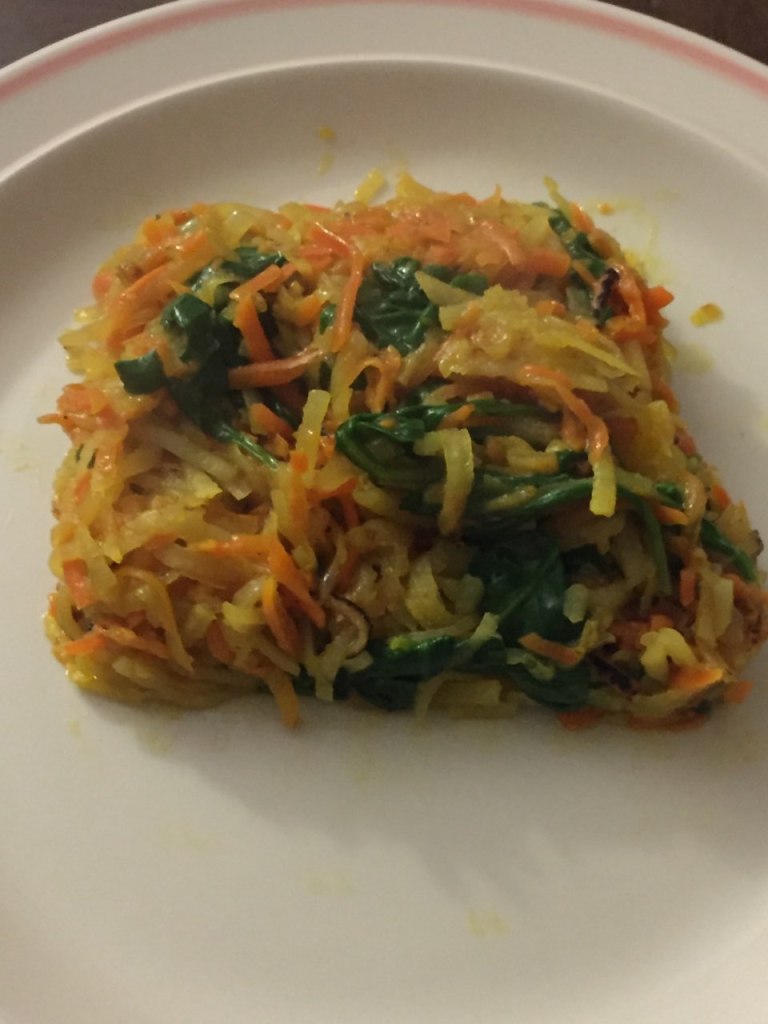
It was ready to plate and eat. You can add seasonings or sauce if you want, or just have it like this. I had this as my main dish (I ended up having a second portion as well). This would work as a side dish. I’ve made this with grated broccoli stalks instead of spinach in the past, but would caution you to use just a little broccoli stalk (and shave off the outside first). They can take longer to cook, but do provide additional fiber.

I used citric acid instead of salt, but that was just my preference to make this a lower sodium dish. I like to use ground turmeric from time to time. There are many health benefits, and it adds flavors that my taste buds enjoy. Ground coriander also brings some additional health benefits. Caraway seeds were something new for me to use. They are good for digestive health, and the seeds add a nice textural element to the dish. If you want to use fresh ginger, garlic and turmeric, I say go for it. I would just recommend adding them after the vegetables have cooked for about 10 minutes and not blending them in with the vegetables at the beginning, since you don’t want to overcook the ginger, garlic and/or turmeric, and possibly lose of the potency of the flavor or health benefits.

Whatever you decide to do, I hope you have fun with this healthy, flavorful, and colorful meal.